
Episode 54: Finale
with Lindsay, Lucy, and Sophie Allebest
On the final episode of the podcast Amy is joined by her daughters — Lindsay, Lucy, and Sophie — who help reflect on and celebrate the history of this project, some of the most valuable lessons learned along the way, and how the knowledge gathered through this work echoes both forward and backward across generations.
Thank you for sharing this journey with us, listeners. Please join us on YouTube (@breakingdownpatrarchy) where Breaking Down Patriarchy is continuing to grow.
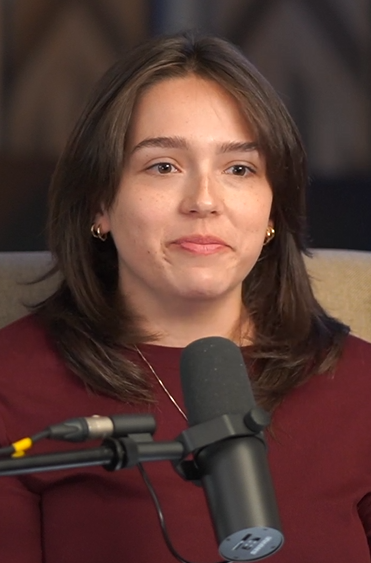
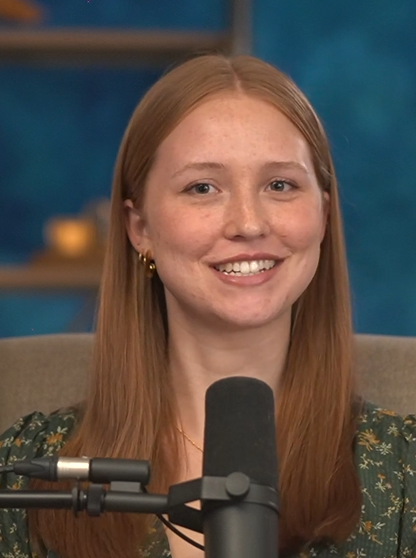
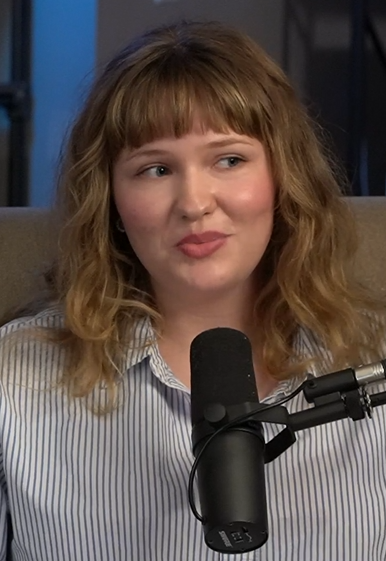
Our Guests
Lindsay, Lucy, & Sophie Allebest
Amy Allebest: In 2020, I recorded the very first episode of Breaking Down Patriarchy. I started the episode by reading an excerpt from Gerda Lerner’s The Creation of Patriarchy, and I'm going to read it again now: “Men and women live on a stage, on which they act out their assigned roles, equal in importance. The play cannot go on without both kinds of performers. Neither of them ‘contributes’ more or less to the whole; neither is marginal or dispensable. But the stage set is conceived, painted, defined by men. Men have written the play, have directed the show, interpreted the meanings of the action. They have assigned themselves the most interesting, most heroic parts, giving women the supporting roles. As the women become aware of the difference in the way they fit into the play, they ask for more equality in the role assignments. They upstage the men at times, at other times they pinch-hit for a missing male performer. The women finally, after considerable struggle, win the right of access to equal role assignment, but first they must ‘qualify.’ The terms of their ‘qualifications’ are again set by the men; men are the judges of how women measure up; men grant or deny admission. They give preference to docile women and to those who fit their job-description accurately. Men punish, by ridicule, exclusion, or ostracism, any woman who assumes the right to interpret her own role or— worst of all sins— the right to rewrite the script. It takes considerable time for the women to understand that getting ‘equal’ parts will not make them equal, as long as the script, the props, the stage setting, and the direction are firmly held by men. When the women begin to realize that and cluster together between the acts, or even during the performance, to discuss what to do about it, this play comes to an end.”
For the past five years, I have been studying the social system of patriarchy, which human beings have been engaged in for about the last 12,000 years. I've been breaking down patriarchy in both senses of the word: breaking it down in order to understand it, and breaking it down in order to dismantle it, intelligently and compassionately, with love for all human beings, including men. This work has been profoundly important for me, and I'm feeling overwhelmed with gratitude as I announce that this episode will be our last episode of the Breaking Down Patriarchy podcast. To celebrate and reflect back on these five years, I have invited three of my very first guests, people who have been with me all along, my three daughters, Lindsay, Lucy, and Sophie Allebest. Let's start by having you each introduce yourselves just a little bit, and we can go in age order.
Lindsay Allebest: Okay. Hello, I am Lindsay Allebest. I am Amy and Erik's oldest daughter. I'm 24 years old. Just some facts about me, I graduated from Boston University two years ago. I studied history, and I will be continuing my history education this fall at Stanford University doing a master's program in US History. And I did the very first recording of an episode with my mom. I think it was the seventh episode when it aired, but it was about Olympe de Gouges and her Declaration of the Rights of Woman and of the Female Citizen, which was written during the French Revolution. And we recorded that episode first, partly because I had just taken a class on the French Revolution, and we read that text and I thought it was so interesting. And I don't know if you, Mom, brought it to me or if I brought it to you.
Amy: You brought it to me.
Lindsay: I brought it to you.
Amy: Yeah, I’d never heard of it before.
Lindsay: Maybe a text that some people would overlook, but one that was really interesting because of how political it was. But anyway, my personal interests very much intersect with patriarchy and women and gender studies in history. And stories that are often overlooked and people who are not included in curricula traditionally, so it's been really special to be a part of this project. I also am the person who posts all the Instagram posts, so I see all your comments and I'm the one posting those things daily and interacting with them. So I've been with this project almost the whole time, and it's very special to be part of this last episode as well.
Amy: Thanks, Linz.
Lucy Allebest: I'm Lucy. I am the second daughter, the second child, and I'm 22 years old. I just graduated a month ago from the University of St Andrews. I also studied history, focusing primarily in 20th-century colonial history, which also very much intersects with patriarchy and gender studies. I think we've all been involved in the project in some way or another, not just as family members, but we all did episodes fairly early on. Mine was on the UN Declaration of Human Rights, so we were talking about Eleanor Roosevelt, and I remember bringing in some anecdotes or facts that I had learned in my high school class. I was taking AP US History at the time, so similar to Lindsay, I was incorporating things that I was learning in school and then discussing them with you. And that was a very enriching part of my education, and it was unusual because it was just the beginning of a project that started such a different phase of our family's life. But it was very meaningful that we were among the first to talk about these things with you, and it was like, “Well, here's what I'm doing for my homework, so this works pretty well.”
Amy: Yeah. And you also know each podcast episode probably better than anyone because you transcribe them.
Lucy: That's true, I do the transcripts. Yeah, those are on the website.
Amy: Thanks, Luce.
Sophie Allebest: And I am Sophie, the third and final daughter. I'm 19, and I'm currently a student at Smith College, where I study philosophy and art history. Way back in season one, I did a podcast episode about Mary in early Christianity. I had a lot of fun analyzing a Velázquez painting, and my interest in art history came out there. And then my mom will never let me forget when I pronounced the word “capitulate” as “catapult” in a way that was not my finest moment.
Amy: You have to use it in the sentence of how it happened!
Sophie: I don't even remember exactly.
Amy: It was “The nuns had to capitulate to their leaders.” And you said “The nuns had to catapult to their leaders.” And the visual of catapulting nuns– [Everyone laughs.]
Sophie: Well, I was also 14 at the time.
Amy: That was behind the scenes. We let you redo it and it was cut in the edited version.
Sophie: I was like, “You can't let that stay in there.”
AA: We laughed about catapulting nuns for a long time.
Sophie: Yeah, well I just remember those early days when we were recording it in your closet around all of your clothes. And it was so cool to see you start that project, and it did start kind of small and it's really been a joy to watch it grow and reach so many people. I also did a few short-form videos for the Instagram last summer, so that's another way I've contributed a little bit, and I'm so happy to be here. I'm so proud of you, Mom.
Amy: Thanks, Soph. Okay, thank you for those introductions. For the rest of the episode, I'm going to let you ask me questions. This is going to be nice, actually. I was going to say it's going to be a break for me, but it's not, it's actually going to be harder for me. But maybe you can take turns asking questions. We've made an outline, but feel free to go off script and we can just turn it into a conversation.
Lindsay: Okay, I'm going to ask you the first question, Mom, and then we'll go in age order again. My first question for you is: why did you start this podcast, and why are you wrapping it up now?
Amy: Well, it would be interesting to hear how you would all answer, like what you remember. But I started the podcast because as I was wrapping up my master's degree at Stanford, we lived in California at the time, my master's degree was in liberal arts, it wasn't in gender studies or anything, but I found myself always writing papers about gender, always asking questions about gender. And I wanted to do a next degree learning about gender, and actually, I was thinking of even doing an online course or something. I just had all these questions about patriarchy. How did it start, how, when, where, who I needed to know about the system. And as you all know, I looked at Stanford because I was there, but they didn't have a PhD in women's studies or even gender. I looked at Berkeley, but they didn't have a PhD program. Lindsay and I drove to UC Santa Cruz and met with them, and I remember even just sitting in the office with the young woman who was telling me all about, like, “You'll take these courses and these courses, Angela Davis is still on the board here at UCSC.” And I just realized that I would not be able to hack it as a first year PhD student. And I remember thinking this, like I've never read any feminist theory ever. I'm going to be joining this program with 22, 24 year-olds who have majored in gender studies. I'm going to be out of my depth. I need to do some preparation to where I would even feel comfortable applying for a program. And so I decided to educate myself.
And then I talked with my friend Malia Morris. We went to lunch one day, and I was like, “As long as I'm going to all the trouble, all this work of reading all these books and learning all this stuff, I really want to share it. Because a lot of people want to or need to know this, but they don't have time. Should I write a blog?” And she said, “No, you should do a podcast.” So that's why I started. But sometimes I wonder, of all of the worthy causes, why patriarchy? Why did I focus on this and dedicate so much of my life to it? And I think the engine that just would not stop inside of me, even when I would get exhausted and feel like, “Ugh, I'm done,” I would wake up the next morning needing to know more and needing to understand it and to put it out into the world, is because of the pain in my life that patriarchy caused. And I think I knew deep down, even though I didn't have words for it, that patriarchy had destroyed the lives of so many of the women that I knew and loved. It really caused their self-confidence to wither. They just turned to seed on the vine. Their human potential wasn't allowed to be actualized. And sometimes they didn't– almost always, they didn't even know why. And we were all living this life and there was this massive, massive thing that was causing, again, women to not be able to thrive. Nobody understood where it had come from or nobody was doing anything about it, at least in my community. That's why I started the podcast and that's why I kept it going, was because there was such a need for it.
And then you asked why I'm stopping now, and I think it's because I feel like I wanted to answer those questions and I've answered them now. You know what I mean? I'll still be working on Breaking Down Patriarchy on the YouTube channel, in a different format that's shorter and more visual and reaching a different crowd. But in terms of those initial questions of how, who, what, why, where, when, and the major, like the preparation, or even more so now, it's even more than what I had envisioned. This is like an online master's degree in women's studies, gender studies, and it's free for everyone. I think of it more now that it's wrapped up as a course online that anybody can take. If you listen to all five seasons of Breaking Down Patriarchy, you will understand patriarchy really well and how to deconstruct it. So I just feel like it's wrapped up now. Anyway, that's that answer.
Lucy: Can I just say, I would add to that, I think it's a little bit funny, I think it goes full circle. Now, if you looked at those PhD programs and you looked at the curriculum for each one of them, I think you would think, “Well, I already know all of that.” I think you truly have taught yourself so much that now you're overqualified.
Amy: Oh, that's funny. That might be true. Thanks. Yeah, I feel really proud. I've read so many books. Anyway, yeah. Thanks, Luce.
Lucy: Let me ask you a question. Who were some of your most memorable guests or what were some of your most memorable episodes?
Amy: Okay, I'll say one for each season maybe, and it's very hard to narrow it down. Season one was really special because it was all people I knew. I mean, family members, friends, not experts in patriarchy. We kind of held hands and walked through it together and learned together. I would say that one of the most memorable guests for me was Suzette Duncan. She was one of Sophie's teachers in elementary school, and our whole family loved Suzette so much. And her life was just so different from mine, the way she grew up. This is a woman who's Black, she's a little older than me, she's a gay woman and married to a woman, and she has some disabilities with pain. So all through the episode, we read Sister Outsider by Audre Lorde together, and Audre Lorde was also a Black lesbian poet and public intellectual and writer. And I just felt so humbled, first of all, that she would do the episode with me, that she took the time to do it. I've never paid a guest to be on the episode, they just volunteered their time. And for her to read the book, put so much into the preparation for it, and then sit with me and tell me all about her life growing up in New York. I remember her talking about her mother combing her hair straight, to straighten her hair, and how it burned her scalp. I remember her talking about how a lot of the families that she knew were struggling with cocaine addiction in her neighborhood, but that she went over to this super fancy private school and what that felt like for her. That was very, very, very memorable.
And then so many other episodes from that season, but a similar feeling for me of such different life experiences, but patriarchy had hurt all of these women so much in their very, very different circumstances. Patriarchy was a common pain point. I could go on and on, but I'm not going to because it'll take too long. Season two, I would say Gabby Blair. Gabrielle Blair, I was star struck by her at first because I'd been following her for so long. She talked about Ejaculate Responsibly, which hadn't been published as a book yet, she just talked about the Twitter thread. Gabby is such a good influence on me. We're friends now, she's a dear friend of mine now. In her writing, she does not hold back. She is a flamethrower. And she's also a very kind person, but her ability to speak her mind really inspires me. And that was really an important episode for me.
Season three was my global season. It was kind of an expansion of season one, where I was talking to women in totally different circumstances, but that I'd never met before. And one that I remember was Jamie Chang, and she was the translator of a really famous Korean feminist book called Kim Ji-young: Born 1982. Here's this Korean-American woman who pops onto the screen. I’d never met her before, she's the translator for this book, and we talked and talked and talked after the episode was over. We had so much in common. And that was incredible. She's the one who comes to mind to represent that feeling when someone would pop onto my Zoom screen in Nigeria or in Peru or in Korea or in Japan, and I would learn so much and be humbled and have so, so much not in common, but then be like, “How do I feel like we're cousins right now?”
And then in season four, I would say one of the most memorable guests was Levi Murray, because he did the episode “How to be an Anti-Patriarchist”. This is one of the episodes, I recommend all these episodes, but he's this dentist in Colorado, I don't remember what denomination of Christianity, but different from my faith tradition. And he just decided, he's like, “Patriarchy's horrible, I'm going to do something about it.” And he had been researching and he had some of the most profound insights about patriarchy that I've ever heard. And then season five, I have to say probably the whole fiasco with Sharon McMahon was one of my most memorable episodes. Because, as you know, Sharon McMahon was the most famous guest that I had, and I accidentally got the time wrong and left her hanging on Zoom. And that was memorable. I ended up recording the episode with her in the airport because that was the only– she was so generous to give me another chance to record with her. She's recorded like all the major podcasts in the country, and she was on my podcast and I stood her up and I was, you know, I cried.
Sophie: I remember. Sorry. You were really upset, and we had to be like, “It happens to everyone, Mom. You’re not a terrible person. It’s okay.”
Amy: It was so bad. And it was so lovely that she gave me another chance. And I recorded at the airport right before our flight for Thanksgiving. Okay. Those are my answers. Do you have any episodes that you remember, or any guests? I guess I was talking mostly about guests on that one. Do you remember any guests specifically?
Lindsay: I think the other family members that you've had on the podcast have been really cool to listen to. I guess they've mostly been my aunts and cousins. My first cousin once removed, Jessica, my dad's cousin, did she do one or two episodes?
Amy: I think one.
Lindsay: On Our Bodies, Ourselves by the Boston Women's Collective. I wasn't really involved in that episode at all, and I only listened to it I think about a year ago. But it was a really cool text, and also just really cool to hear Jessica talk about her experience with feminism, and especially with her body and the work she does in yoga and in art and in activism. And also her experience living in the Netherlands and how the culture is different there, because our family is, or at least me and the kids are a quarter Dutch through my dad's side. So Jessica has a lot of experience living in the Netherlands as well. And also the text was so interesting, and to hear it from her experience, which felt so different from ours. I think in that episode I could tell, listening, that it was something really different for you as well. Such a different experience. The freedom that she has in her body is so remarkable and admirable and different from how my life has been and your life. Anyway, I thought that was really an inspiring episode, but also so cool that it came from a relative of mine. I really enjoyed listening to that and just how, like, whoa, some people live so freely in some ways. There was definitely a lot of reflecting going on for you in that episode, I could tell, but also for me listening to it. That was a cool favorite of mine that I listened to recently, even though it's a pretty old episode.
Amy: Every time I see Jessica, she's like, “Are you ready?” And what she means is, “Are you ready for me to take you to the nude spa?” [Everyone laughs.] I'm like, “Nope, not ready!”
Lindsay: That's just the next level. It's so cool, and maybe one day we'll be ready. But Jessica is a leader in that in our family.
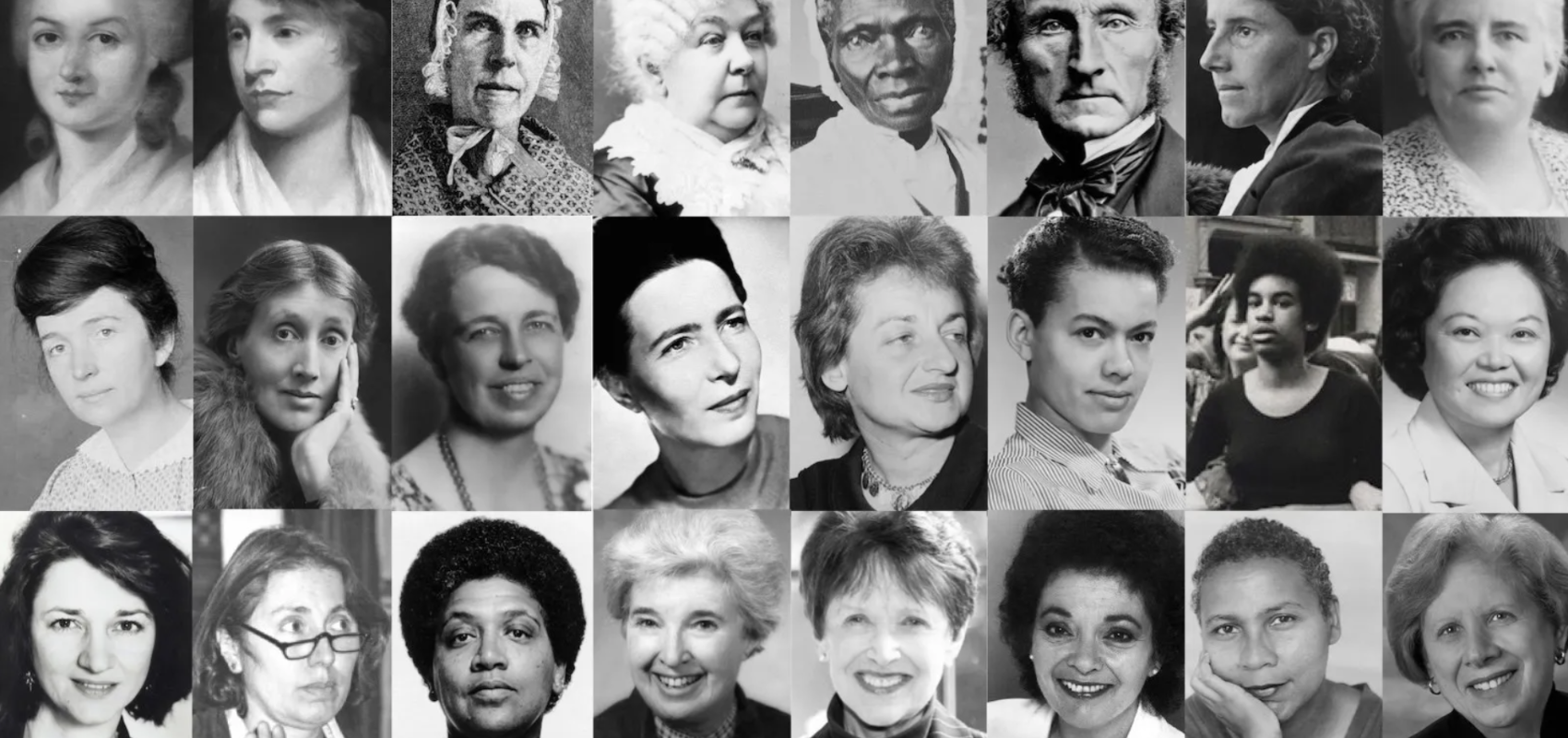
“If you listen to all five seasons of Breaking Down Patriarchy, you will understand patriarchy really well and how to deconstruct it...”
Sophie: That's one thing I loved about the podcast in general and you really opening up that conversation, was being able to connect with a lot of our family members, specifically the women in our family. It doesn't naturally come up in a lot of our family conversations, so having text threads or in-person conversations and hearing all of my family members' perspectives on feminism and on patriarchy was really valuable. And I don't think it's something that would've happened to the degree that it did without your work. It helped me feel closer to my family and the women around me, so I'm grateful for that.
Amy: Hmm. That's cool. I had not thought of that. Thanks, Soph.
Sophie: I have a question for you, which is, what were some of the most important books or things that you learned, and why? And I'm also interested in what were things that challenged you? I know a lot of things were really relatable for you to learn about, or they came really easily to you, but I'm wondering if there were things that made you think extra hard or you thought, “I disagree with that.” What was most important, and what were some challenge moments with things you learned?
Amy: Yeah, okay. If I had to choose one book, and you'll remember this, when we went on a trip to Italy after you graduated, Lindsay, and I was reading The Creation of Patriarchy. Remember that? I was reading it on the train and highlighting and talking about it, and I finished it and immediately started it over again. That book is dense, and I've recommended it to listeners before. If people have been listening to the podcast, you listen to episodes on that at the very beginning. That book has given me more relevant frameworks that I can use in actual conversations than any other book that I read in terms of understanding the system. One example I remember, well actually I can think of several examples of this, where people will say, “Well, men struggle too.” And questions like that, where people kind of challenge. And before I had read all of these books and really thought about it, I was like, “That's true. Wait, I don't know what to say. I don't know how to understand this.” And Gerda Lerner, in many different ways all through the book, talks about how patriarchy means, it’s definitional to patriarchy that a small group of men exercises power over all the other men for many, many different reasons. For race or strength or class or ability, there are many men that get left out of the historical record, many men who don't get leadership opportunities for various reasons, but it excludes all women because they're women. It excludes all non-men because they can't even get in the first gate. And I learned that from The Creation of Patriarchy. And that's just one example of where someone will say something to me and I'm like, “I understand this now because of that book.” And then, did you say some of the most important things that I learned?
Sophie: Yeah, books and ideas.
Amy: Books and ideas. Yes, to your point, Sophie, I think you said that there were some things that felt relatable and natural to me. The first many books, The Feminine Mystique by Betty Friedan, I was like, “I've never felt so seen and understood.” And it was written in the early sixties, I think 1960 or ‘63, maybe. Because, as I've said before, the second wave of feminism just missed Mormonism. It was like Mormonism had a force field around it and the second wave went over and Mormon women didn't get to benefit.
Lindsay: I wrote some paper about that.
Amy: You did. In college, right?
Lindsay: Yeah, exactly that. And I interviewed our family members, and yes, it's true what you just said. Sorry, just to add that.
Amy: They didn't even know that it happened, right?
Lindsay: No, yeah.
Amy: They’d never heard of the books.
Lindsay: Yeah, I interviewed your mother. And her experience, you would think that maybe she had been born a couple decades prior even just in terms of gender and her experience.
Amy: And my mom's friends, too. Yeah, I remember that paper. It was such a good, interesting paper with those interviews. So yeah, that was the first phase, was me being like, “This is what I needed!” This would've saved me from sobbing in my minivan when I was a young mom and from being tied in knots sitting in church or at family discussions. So it was all about me and my feminist awakening. And the next phase, as we went chronologically and as we got to the second wave of feminism, was when I started reading Audre Lorde and I started reading This Bridge Called my Back. I will never forget that, too. I read that book sitting on the side of the pool while you would swim laps, Sophie. And again, kind of like I said when I talked to Suzette, I just felt this sacredness of these queer women of color writing about their experience in the world and me just going, “I had no idea.” I'm sharing a planet, I'm sharing a community with these women, I see them. And I think every human, it's maybe human nature to think everybody's experience is like their own. And to find out that it’s not. It is not. And that they did the work to let me in so that I could understand meant the world to me.
I felt the same way then when I started reading queer authors. And I think that would be my answer to what challenged me, to be honest, if I can speak totally openly. Just because of the time and place I was raised, you know? I just didn't know. There was just so much that I didn't know. And again, I just feel really grateful for scholars who published their work when it was really, really hard to do that. And for people who have spoken openly about it when they could lose family members and friends and even lose their jobs for speaking and writing about it, so that they could share it so that I could learn it. That was challenging for me. There were ways of thinking about gender and sexuality that I, honestly, had resistance to at first because it was so different. And it's kind of endearing to look back at my past self now. Remember when I did the Judith Butler episode, and I introduced, you know how I read about the author. And you can hear me saying, “Judith Butler uses both she/her and they/them pronouns, and I'm going to use they/them so that I can practice because I've never done that before.” And I made that decision very purposely knowing that some of my listeners would not like that. But it's funny to me looking back that I had never used they/them pronouns before, and that was only a few years ago. Isn't that crazy? Because now that's just so normal among people I know and dear friends of mine. It's interesting and really cool how fast things can change. But I think that would be my answer. That was maybe the steepest learning curve and fastest for me, and one that I'm very, very grateful for.
Lindsay: Yeah, thank you for sharing all those things, Mom. I think that segues nicely into my next question for you, which is, what are some of the most important ways that doing this podcast has changed your life?
Amy: Hmm. Well, you mentioned before the body thing. Our Bodies, Ourselves really, really helped me. I think one of the ways that I think patriarchy has harmed people, I think regardless of gender, but especially, especially women, historically and speaking for myself, is the disconnection from the body and the disconnection from sexuality. And that has been strategic and very patriarchal. If you look in, obviously like the Catholic Church, in religion especially, and then how that influences the broader culture. And through books like Our Bodies, Ourselves, even Mary Wollstonecraft in the 18th century writing about beauty standards and how women are asked to spend all of their time and their human potential beautifying themselves and not thinking. That really started me on a journey to reconnect to my own body and rehabilitate what had been lost and broken. And I'm still working on that.
And like I said before, with conversations, things that come up now, I would say I cannot be gaslit. I am ungaslit-able when it comes to patriarchy and sexism. There's a lot that I don't understand, of course there are things I don't know, but if you ask me questions about the history of patriarchy and how the system works, I'm not scared anymore. I'm not scared of it. Sometimes when people would ask me questions, my nervous system would get rattled. And partly, honestly, because of how internalized patriarchy and misogyny was for me, I was scared that they were right. I think that there is something for my generation and prior, and even still now in some communities, patriarchy has worked because it really does convince people that men should preside over women, and women absorb it too. And I think I was scared to go there. I was scared even in conversations to look at it because I was scared that women really were inferior. And that has been totally deconstructed in me, I would say. And I know why. Because I know that it was made up and I know exactly how and who and when, that has really put that to rest inside of me. So I can hang in any conversation about it now, and I'm really proud of that.
Lucy: That's good. And I'll add, like you said, it's your generation and prior, but that has not disappeared, even in myself. I can only speak for myself. Obviously there are young women of my generation who have bought into patriarchy more, but even for myself, who at a pretty young age, I mean, I've been hearing you talk about these things since I was, what, 12? And thankfully, not as much recently, but even in high school, there have been moments where I find myself so upset by things, and there's still a teeny tiny voice that is like, “Are you overreacting?” Or worrying that– I don't believe that women are inferior, but we don't know what the world would look like if men and women had the same generational experience and opportunity. Because it's so recent, I guess that's what I'm saying, because it's so recent that women have gone to college and joined the workforce, we think that we know what women are capable of. But we actually still don’t, because we're still held back by thousands of years of inequality. And because of that, I do wonder sometimes, are we actually fully equal in our potential? And I do believe that we are, but only time can really show that. It can't happen in this few generations. And that's a freaky thing to think about. But that doesn't mean that we can't still believe that yes, women are equal to men. But I'm just saying that that's something that still comes up in my mind, and it worries me when I catch myself having those kinds of intrusive thoughts, almost. Like, “Ooh, I didn't know that was still in my psyche.” But it happens even to younger, progressive, self-proclaimed liberated women. It still shows up.
Amy: What do you think about that? Do you feel the same way?
Sophie: I do feel the same way. I think maybe less so, for some reason, but I definitely feel that. And like you were saying with gaslighting, I don’t know that I've ever been gaslit about it. But when other people do talk about it like it's true, you do start to be like, “Wait a second.” And it's almost hard to prove it in the moment that that's not true, and it’s kind of like, how do you even prove that? But I also think that deconstructing that within myself and seeing you deconstruct it actually gave me more empathy for those who haven't, in a way. I've always been very pro-feminism and, I don't know, kind of feisty about it. And I never had trouble being that way. And oftentimes I would kind of feel frustrated with people who weren't able to do that. Like, “Why aren't you caught up yet? How can you be so behind? How can you be holding yourself back like that?” And interrogating the ways in which I still have internalized misogyny and patriarchy and the ways that you do, it gives me so much empathy for the women who have those ideas so instilled in their mind that they kind of can't break free or really struggle to. And like you were talking about, a lot of women that you know are completely– not completely, but honestly kind of destroyed or really, really harmed by patriarchy. So I think that having the tools to understand why that happened, how it gets internalized, and what that actually looks like, gave me empathy for those who really struggle with these ideas. Because I've been surrounded by a really wonderful family who thinks that all of this deconstruction is great and is challenging those things, but for those who are a little more behind in that area, I'm like, “Okay, I understand where you're coming from.” If it's even a little bit in me, then it must be in you in ways that I can't even understand. So I'm grateful for being able to have that empathy through education.
Lucy: Can I add something? That reminded me how important it is, and for some of us it’s less natural or it's a little bit harder to have patience with people who are maybe going on this journey more slowly or who are going on it completely alone. We've all gone on this journey together as a family, or that's how I perceive it, but some people really are learning about it and going through it completely by themselves. And I remember being in middle school, seventh or eighth grade, and I was such a jerk about it sometimes. And I had one friend– because I was just so impatient. I thought that I suddenly knew everything or I knew what was right and what was wrong, and it was very black-and-white thinking. But I had one friend who I could tell was interested in what I was criticizing in terms of patriarchy and sexism in general. And I remember we were in the library and she asked, like, “I don't think you are wrong about feminism, but can you explain why we still need it?” Or like, “What's still wrong, and what still needs to happen for women to be equal?” And I, being 12 or 13, had neither the patience nor the vocabulary, nor, to be honest, the emotional capacity to deal with my own struggles and also educate someone else. So I was a total jerk about it and I stormed out of the library and I didn't even answer her questions! [Everyone laughs.]
Sophie: Lucy!
Lucy: What was wrong with me? I was a tween. But I felt so offended that she even asked. And looking back, I'm like, oh my goodness, what a missed opportunity to hold her hand and be like, “This is what I've noticed. This is what I talk about with my mom.” She probably wasn't having those conversations with her mom, so she just wanted to hear what I thought. And I wish I'd had more patience in that moment to be like, “You know what? I was like you–” probably a few months ago, to be honest, I was 12. And to go through that with her. I regret not having that patience. And again, I think I was just too overwhelmed by my own struggles as a teen. But it needs to happen, because if we don't slow down, at least sometimes, and meet people where they are, then we're just leaving a ton of people behind. And I think that's one of the most important and kind of fundamental tenets of this whole project, is providing the basics and accepting that people can just jump on wherever they are and being patient.
Sophie: Yeah. Oh, sorry. Go ahead.
Lindsay: Oh, I was going to say on a little bit of a different note. I have to say, I think that it's so true that you probably didn't have the vocabulary to super well explain to her why “here are the issues,” when you're so young. But it also doesn't really have anything to do with age either, but just like where we were. One thing you mentioned, Mom, that this project has brought you, but I think our whole family and me, speaking for myself, is the vocabulary and the data to back up what we experience. I have a little bit of a funny story, if that's okay, just reflecting on what tools this journey has given me. I think I've told you all this story before. In high school, I was dating a very nice Mormon boy because we were in the Church at the time. He's a very nice, very friendly person from a very sweet, very nice family. And I think I was probably 16 or 17 at the time, and we were wearing pants to church. That's the phase we were in, right? “I'm wearing pants to church.” And it really was in our ward, to be honest, a show of something. So I was very proud to wear pants to church.
Sophie: People were not nice about it when you wore pants to church.
Lindsay: I wore pants to church, and this boy who I was dating was not in my ward, but he was in my stake. And I got a text from him later that day and he said, “Did you wear pants to church today? [Laughing-crying emoji].” This was maybe eight years ago.
Lucy: I do not know this story.
Lindsay: Oh, haha. And I said, “Yeah, I did wear pants. How did you know?” And either I had posted a picture or something, but he had seen it. And he was like, “Why?” And I was like, “Why do you wear parents to church? Why wouldn't I?” And I think he said, “That's just not what women do.” And I was like, “Well, why not? Why can’t I? What's wrong with that?” And the whole conversation, I have the whole thing in screenshots still, and when I look through it, I'm just like... I just didn't have the words to explain myself. I was like, “Well, the only reason women always wear skirts to church is because of gender roles.” And that's probably the strongest word I had, like, gender roles, right? I was like, “Well, I'm frustrated that it's cold at church because men in suits set the temperature, so if I wear pants I'm warmer.” And stuff like that. But he was like, “That's just not what women do.” And I didn't have anything powerful to back myself up that it shouldn't be that way. I can't really tell you why it is that way or why it's unfair, but I just feel that it is. Anyway, we kept dating after that, which I think is the funniest part of that story. It really bothered me, and I think by the end of the conversation I was like, “I don't want to talk about this anymore.” But I couldn't advance my cause, really, in a way. Anyway, a very funny story, and very unfortunate. I want him to know, if he ever hears this, that I forgive him. Because that's the culture we were all raised in, and he didn't know any better either, right?
But now if someone said that to me, I mean, think of all the tools I have in my pocket. And even if I did come to a point in a conversation like that where I felt stuck, I could text my mom. “What should I say to this? This is clearly ridiculous. Can you point me to a book?” or something. And I think that as a teenager, but also regardless of age, just at that point in my life, I didn't know why I was feeling those things. Kind of like you said, you experience all these things, like, “Wait a second, why can't I wear pants to church? Oh, I can. Oh, people are making fun of me. Uh oh.” You know? So, anyway. And I think that that has changed for our whole family, pants at church aside. The things that we all experience in the world, like, “Why is it this way?” Even for Dad and Stone, our brother, we have the language and the data to say, “This is why that's the way it is, and here's the proof.” Because some people need to see that. And like, “Here's what we can and should do about it.” And I see everybody in our family doing that and calling those things out very succinctly and scientifically. And I think that's really important, and it's something really cool that I think this project has brought all of us also. That's just a favorite story of mine.
Sophie: Wait, sorry, can I add one more thing? I also appreciate exactly what Lindsay was saying, having the words to talk about it, and Lucy's story, taking the time to talk to people. I also appreciate it because I think, not that this is the most important thing, but I think it makes me come off a little bit better when I can talk about it. I have so many memories of elementary school and even into high school, when I found myself unable to back up my point, not only was I feeling confused, I was humiliated and often that turned into rage. I would get so mad. I was mad at myself for not knowing, I was mad at someone else for even making me explain myself. Because I had these feelings and then someone would call me on it, and I didn't know how to back it up. And I was like, “How dare you ask, and why do I not know?” And I have memories, I was evil to the boys in my elementary school. I'm so serious. I was having to hold myself back from physical violence because I was so upset. They would say sexist things and I was like, “I want to hurt you so badly.” And once you have that language, you're able to explain it and you're like, “Okay, I got it.” Instead of being like, “I need to start punching people.” So, it is a good outlet for that pain to be like, “And here's my source.”
Amy: That's a good point. That's really interesting.
Lucy: And we don't always need to be tone policing ourselves and making ourselves as palatable as possible. That can't always be the number one priority, and nor should it always be the number one priority, but it helps a lot. And I have found that using the vocabulary and the frameworks and the ideas that you have taught us, Mom, through, I mean, just our own family conversations as well as directly through the podcast. I've found that in conversations I've had, it makes people a lot more inclined to listen when you can say, for example, “I actually think that that was more sexist or a double standard. That wasn't misogynistic, because let's look at the Latin roots,” or whatever. When you can really break things down, people are like, “Oh, you're actually not just super angry at me and using these aggressive words, because I didn't even know that that's what that word meant.”
Amy: Mm-hmm.
Lucy: And again, sometimes you need to say things that make people angry, but you can sometimes reach people a lot more when you can demonstrate that you deeply understand what you're talking about and that maybe it's less scary than they think it's going to be.
Amy: Hmm. This is excellent. I've never put those things together before, like that the ability to speak with precision also helps you stay calm so that you can be kind in the delivery. I'd never really put those exactly together before. That's a really great insight. I also want to add a couple of things on this topic. This took me by surprise to hear you talk about internalized misogyny in your generation. And it makes me sad, obviously, but I guess it doesn't surprise me, because one of the things that I reflect on most often is the drop by drop by drop experience that a human being has from the time they're born that shows them what the world is, right? All the rules that don't even need to be said to them, they just learn by looking around them. And it's just so arresting. You've seen me do this when you've seen me speak in public, I have US presidents, and just seeing the lineup from George Washington to now of all of the US presidents, and you just see it and it looks generic and neutral, you don't notice it. And then if you see an image where every single one of those presidential portraits is a woman, it takes your breath away. And usually people laugh when I show it. It's involuntary, they just laugh. It's silly. And then it goes silent. “That's what we're experiencing?” You don't even see it. And then Lindsay created this fantastic image of all of the LDS leadership from top to bottom, and again, if you're used to seeing that, it just looks neutral, it looks generic. And then if you flip it to women, it either makes you laugh or it feels sacrilegious to a lot of people who are religious. Like, “Whoa, that is disrespectful.” And then you gasp.
But we don't even notice that that's what we're absorbing. So my point is the fact that so many things have changed, thank goodness, but a lot has not. And a baby girl being born right now, going through this world, still sees, in so many areas of life, that it’s all men leaders in business and arts and sciences. And if that's what you're seeing, nobody needs to tell you that men preside over women. You just see it. It is the neutral. So fighting against it is really tricky. I have one more thing to show, which maybe I will and then we can cut it if it's getting too long. But what were you going to say?
Lucy: I was just going to say that that's a reason why sometimes, again, it's the water we're all swimming in, so women also don't notice it a lot of the time. But I think that's why men seem to notice it less, is because the faces they're seeing, of course with exceptions of racial differences and things like that, not every man is seeing himself in leadership, but he's not not seeing himself because of his gender. So I think that's a very useful tool, gender flipping things, especially for men. Because as women we sometimes don't notice, but we do at least realize that the faces we see do not look like our own, in a way. But men especially wouldn't notice because they're seeing their own faces everywhere. Again, with exceptions.
Lindsay: I mean that's what Dear Mormon Man focuses on.
Amy: That’s what I was going to say.
Lindsay: Like, what would you do if this was the world that you lived in and you were not seeing yourself in all of these places that surround your life completely?
Amy: Yeah. I was going to say one more example of where this has been helpful in confronting misogyny and having this research to be like, “I know how to address that,” is in our family. My husband, your dad, has lived his whole career and our whole family's life in the world of tech and chess, which are two of the still most male-dominated spaces in the world, I would say in the country, for sure. And I remember early on when dad would be talking about, like, why aren't there more women in chess? And even today, if you look, I should look it up so I get the numbers right, but the first it has to be a hundred top players in the world are men. The best woman is not even close. That's just the fact still right now as we're recording this. And Dad and I, Erik and I, have had lots and lots of conversations, especially early on, a decade or so ago, about why that is. Is that because of nature? Are women less intellectually capable? Or is it a spatial awareness thing? Is it strategy? Is it aggression? What are the features of a chess player that would create a situation where men outperform women so incredibly dramatically?
And for me, when I first read Mary Wollstonecraft’s A Vindication of the Rights of Woman and she talked about, I don't remember what the subject was, but it was some school subject. And she said, “Men say that women are not as smart as men.” And she says, “They're not. Because they haven't been allowed to cultivate their intellect. You don't let us go to school and then you say that we're not as smart as you are.” And I read that and I took that back to Erik because we had talked about it without really knowing what the answer was. And a lot of the top chess players in the world, Bobby Fischer included, really believed that women were not and could not be as good at chess as men. So to look at the environment and the nurture rather than the nature and say that women have not been able to catch up yet, so no, they're not as good at chess yet. But that's because they haven't been given the opportunity. But Lucy, to your point, we are still in the middle of it. In a lot of areas, women have not been able to catch up, and you still have men and women saying, “It's because we're not good enough.” And it is hard to not internalize it when you see the images of men dominating and you hear people saying it's because you're not smart enough, it's because you're not aggressive enough, it's because you're not capable. It is very hard to not believe it on some level.
Lindsay: And it's hard too, like in that chess example, because there isn't an equal opportunity, we actually just don't know. We can't know until people of all genders are given equal opportunity to become chess masters, then we won't know how many of them can be. And obviously there are average biological differences between people of different sexes, no one can deny that. But, first of all, that doesn't really matter in the end. And second of all, you don't know how many of those things are legitimately natural until you have an equal playing field where all other factors are eliminated. I think that's another thing that's frustrating. To be in the middle of it is better than maybe being at the beginning of it, but it's still sometimes dissatisfying and feels unproductive to even have conversations about it sometimes where you're like, “Well, we just don't know. Maybe women are worse at chess,” which I mean, we just don't know. And that's annoying.
Lucy: Yeah. And it allows for a lot of pessimism and optimism, I think. Because it's unknown, it can be very discouraging and it's really annoying to not be able to prove that you're right, in a way. But it also means you can't prove that you're wrong.
Amy: John Stewart Mill said that. He said the burden of proof should be on the person who is discriminating against another group. The burden of proof should not be on the discriminated against group to say, “I promise I'm as smart as you. I promise I'm equal.” The burden should be on them to prove why you're not. But to your point, it is hard when the data does show that we're not as good yet. I will say, just the other day I saw a study that showed babies and caregivers, and they dressed a baby in the opposite gender's clothes to see what toys they would give the baby. If adults think a baby is a boy, they put them on little bikes, they give them trucks, they give them stuff that increases their spatial intelligence, on this chess topic, that increases their spatial awareness, they’re active in space. And if the adults think the baby is a girl, they will give them a doll and encourage them to sit still and give them books to read. And all of those are important skills, right? Caring, reading, being still, being active, being in space. But I love reading that study, and it will bear out. It might take generations, but it will bear out.
Lucy: It honestly makes me feel like I was robbed.
Amy: I put you on a bike.
Lucy: You were my caregiver, so sorry.
Amy: I gave you trucks.
Lucy: No, you did so much better than most. But sometimes I do wonder, if I had been encouraged to do– I'm terrible at navigation. If I had been encouraged to do these things or guided towards math and STEM subjects and team sports rather than, I did dance, it was a performing art, it was a more feminine sport, I wonder what I would be like now. I don't know. I can't parse out what's nature and what's nurture and what's gender and sex and what's, anyway. To your point. This segues well, also, what do you still struggle with regarding patriarchy?
“It might take generations, but it will bear out.”
Amy: Yes, it is very much on the same topic. I do still struggle, I know I did just say that you can't gaslight me and I know my stuff, and that's true. But it's very rare for a conversation to come up where they're like, “Tell me what year this happened.” I know those answers, but the things that are trickier are being with a man that I care about and love, or a woman that I care about and love, and something sexist happens. And again, my nervous system gets activated and I feel like, “That's not right,” or, “That's not fair, that's not true.” And I still don't quite know what to say, because I think the most painful thing– Well, that's not true. It's not the most painful. Anti-women laws are incredibly painful and harmful. It's just a different kind of pain when it's in your own family or when it's in your own friend group. So I'm still working on that and knowing what to say. And some people are better at arguing back without kindness, and some people are better at always being kind, preserving the relationship, making sure that they'll still engage with you. I tend to never want to hurt someone's feelings, so if something hurtful or wrong is said, I still tend to still say nothing and cry on the way home. And I'm working on that.
I will say one other thing, one way that I'm improving, and here's a strategy that I just developed, and maybe I told you this already. I've noticed another thing, and Virginia Woolf talks about this, that you have a patriarch in your head. Because again, if you see all of your religious leaders and your political leaders and all of the leaders in your life have been men, you start to acquire a male presence in your mind that's observing you and surveilling you and you feel like you need to win their approval to be safe and to be okay in the world. I for sure have that. I find myself almost performing for this kind of nebulous male approval presence. It's probably from God. I mean, it's Santa Claus, you know what I mean? A child, from the time they're little, like, “God's watching you… Santa's watching you… Jesus loves you.” And all of the people that you observe are in charge, even your dad and your family, you're like, “I want my dad to love me and think I'm okay.” Anyway, my inner observer is male, and just in the last few months I decided to replace that, not with a woman that I'm going to then be trying to perform for and win the approval of. If I notice myself doing that, I think of little girl Amy, or I think of old woman Amy. I picture it almost like you see babies walking from their mom to their dad or from their dad to their mom. I see myself on a timeline from little baby me to old me and all of the learning and the journey. And I picture where I am on that timeline and I just choose which direction to face, like, “Look what I learned, little girl,” or, “You're going to be okay, little Amy.” Or, “Look at me! I'm still young, old Amy. Look at what I'm learning.” And I'm going toward her. And those are the only two people that I need to please, are just the versions of myself.
Sophie: That's beautiful.
Lucy: I love that, Mom.
Amy: Thanks. What about you? What about all of you? What are some pain points that you experience in your life, and how do you deal with it?
Sophie: I kind of agree about it being people in your personal life. There are so many wonderful men around me, but when they say things that are dismissive or you really realize what a different experience you're having, that's really hard and it puts so much distance between you in that moment. Sometimes there are moments where I struggle to feel close to the men in my life because I'm like, “How are you struggling to understand how this is for me right now?” Like recent examples, and women will feel different ways about this, but I hear a lot of men minimize the gendered derogatory nature of the word “bitch”. And men casually using that term or other things where I'm like, “Hey, I don't think that's okay.” Or, “That's misogynistic.” And they're like, “I didn't mean it that way. It's fine.” And I'm like, “Yeah, obviously you think that.” And people kind of refuse to take that seriously. I do think there's an issue where a lot of men that I know, even left-leaning men, progressive men, they intellectually think that misogyny and patriarchy are bad, and then there's almost this joking, minimizing of how that actually impacts a person. So they're like, “I'm against patriarchy,” and then you call them on it or it comes up and they feel comfortable joking about it or minimizing your experience.
And that's really frustrating because I know they're well intentioned, these are men that I love, and I'm not really sure exactly how it's best to deal with that. And I find myself getting really mad. Again, I'm painting myself as this angry villain in this episode, but I sometimes don't know what to do with being so mad about that. And I do think that having the framework of patriarchy is actually really helpful in that way, because then you can say, “I'm really mad at this system. I'm mad at the ways that this system has–” like we were just talking about, “how the system has influenced me. I'm mad at the way that the system has influenced the men in my life.” I guess, once again, just the value of putting language to things and trying to explain that to people. But it's still hard.
Lindsay: That's how I feel.
Lucy: I agree, and it is an issue for me sometimes. And like you just said, I do have an unwanted male observer, commentator in my mind that I would love to get rid of. So that is an issue for me. But honestly, I think right now, maybe even just this week, but lately, I found that my biggest struggle with patriarchy is my ability to be wise and not get swept away by the amount of pain and rage and impatience that I feel currently about the state of the world and the gender dynamics of the US. I think this is particularly present in my mind because just last night I finished the transcript for an episode that is coming out, or at this point will have already come out, about men's wellbeing and the male loneliness epidemic. And we were just talking about this as a family. Boy, is it right up to here in terms of the pain and the anger that's just sitting right here.
Amy: You don't have patience for hearing about men's pain.
Lucy: Yeah.
Amy: You have your own pain.
Lucy: I have my own pain. That's the thing that I'm struggling with the most right now, I guess, is being the bridge, being the patient, educated– To be honest, I feel so much more able to speak with a woman who is struggling but somewhat willing to join on this path. If I get questions or doubts from a man, I personally am not in a place right now where I can be like, “Let me put my pain aside and walk you through this.” I just can't do that right now. And the way that I see, I mean, I'm very lucky, like Sophie said, to have wonderful men in my life. So thankfully these are not issues that I have with my own father or my brother and the men who are closest to me. But I do not feel incredibly optimistic about how men and women are diverging culturally and politically in the US and other countries like the UK, I think things are similar. That's my biggest struggle right now. I don't see it going very well, and I have zero patience for it. But I hope to eventually get to a point where I am more emotionally settled so I can meet people where they're at regardless of their gender. That's my honest answer.
Amy: Thanks. I think a lot of people feel that way right now. What about you, Linz?
Lindsay: Yes, I can relate to a lot of what all of you have said, but there are some things that are quite different in my life. I think the main thing that comes to mind for me when people ask about the hardest day-to-day thing, and maybe this isn't a day-to-day struggle, but it's one that is on my mind a lot, is beauty standards. And not even really for me specifically, because there are a lot of things that I have stopped doing that are one hundred million percent patriarchal that I don't need to do. Like, “Wait, why was I doing this for so long? Oh, because of patriarchy.” And it's like, okay, I stopped doing that. Like appearance-wise, for example, shaving my legs. I actually haven't shaved my legs in like four years and I'm very happy with that and I'm never going to again, and I've never thought about it since. And that's great. And not everybody's there, but that's just one thing that I did. But there are other things similar to that that I see all the time. Like your skin and acne, and a woman feeling like she has to have perfect skin at all times when men certainly don't on average feel that way, or at least don't do anything about it, necessarily. Stuff like that, where it's really hard to go out if I'm breaking out, it's really hard for me. I am aware that these things are patriarchal, but they provide enough discomfort that it's like, “Oh, I just can't do that today.” I think it's stuff like that where I'm like, “I know that this is patriarchal, but unfortunately I just don't have the energy right now to not do this.”
I can't think of any other specific examples right now, but there's a lot of decision-making that everybody does every day that I really try to be mindful about. Like the choices I make in my life. What's informing how I feel about this? Is this something I've been conditioned to want or to do? I really try to think about it, and if it is something that I've been conditioned to do because of my gender, I try my best to not do it. And sometimes that's so hard because you're pushing back against not just your life's habits and stuff, but also sometimes you have to explain the choices you make, like wearing pants to church. And sometimes it takes energy. I would say that those day-to-day decisions, it's hard for me to know what's patriarchal and what's not and to make informed decisions. It’s really tiring sometimes. And to be really conscious of it kind of creates a rage like my sisters have described, where it's like, I hate that everything I have to do– I have to push back against these things because that's what I feel called to do. I do believe in making these informed decisions even when it's uncomfortable. But it is annoying and infuriating sometimes. I don’t know, that's kind of general. But I would say that's where I am at in my life right now, is being very deliberate about the things I do. And sometimes it is really hard and sometimes I still wear mascara and stuff and then I feel guilty about it, but I'm just going to do it and I don't like it. Anyway, stuff like that. And it's hard to walk the line for myself.
Sophie: Can I add to that? I totally agree. And I also find, I mean, I like talking to people about everything I do in my entire life, but talking to other women about this stuff is also sometimes hard for me. Not necessarily that I feel mad at them about it, but I think a lot of people are resistant to acknowledging ways that their day-to-day habits are influenced by patriarchy. Obviously I'm sitting here in a full face of makeup, so I'm not saying, like Lindsay said, you have your things that you resist on and you have your things where you're like, “Well, I'm not fighting that fight today.” But I think a lot of people have that resistance even acknowledging that that's patriarchal. Like with makeup, they'll be like, “It's my creative expression.” And I'm like, “That's crazy that every woman has the exact same way of expressing themselves through makeup.”
Lindsay: It drives me nuts when people say that.
Sophie: That's crazy that every woman has sensory issues about their leg hair. [Everyone laughs.] I don't know. Sorry, not to call anyone out. And I go to Smith College, which is a historically women's college, and if you're going to go anywhere and see a bunch of women who don't care about what society says specifically about their appearance, it's going to be Smith. And I think it's great, but also sometimes I'm talking to women at Smith and they're saying these things about, like, “If a woman wants to get plastic surgery, then that's her choice and I support her.” And I'm like, “Yeah, I mean, don't shame anyone, but can we interrogate why someone chose to get plastic surgery?” And I think for a lot of women it's a hard thing, because you're told to be super feminine and then you're punished for being feminine in a way where femininity is looked down on. So a lot of women somehow are forced to do these things and then also feel shame that they're doing them. I think having these conversations about beauty standards and how patriarchy influences that can kind of touch on those points of shame, which turns to defensiveness. So I never want to have those conversations and then attempt to call someone out, but it is something that I think all women are working through at different stages, and it is an interesting way that patriarchy manifests.
Lucy: I agree. And I feel the same way. I mean, we've all talked about it. I feel the same as my sisters, and I know that you may as well. But I think I told you that I happened to be catching up on your YouTube videos and it was while I was getting ready for the day, so I found myself watching your video that featured Lexie Kite talking about all of these things as I was literally doing my makeup. And I was like, “Welp. I can't fight this battle today–” Or, I choose not to. I don't even remember what I was doing that day. And like Sophie said, none of us showed up with a bare face.
Amy: No, we're all in makeup.
Lucy: It is what it is. And maybe as we get older we will change our minds on these things or be more willing and comfortable changing our habits if we choose to. But I do find myself sitting on that line and being like, “I am maybe perpetuating a double standard right now,” or, “I am sitting in irony,” or whatever it is, and that's where I am now. But I agree with Sophie that I think the critical part of it is being aware of the roots, and then like Lindsay said, making a conscious decision and saying, “I'm choosing not to fight this specific fight today, but I know what I'm doing, even if it doesn't make any sense.”
Amy: Totally.
Sophie: One final question would be, what are you optimistic about and what are you worried about regarding patriarchy and your community, your country, your world?
Amy: Yeah. One thing I'm worried about is what Lucy just talked about, just the division. And I totally understand why some women, many, many women, and myself sometimes, are feeling like, “You're going to have to figure this out yourselves, men. I'm sorry, but I can't be the one to be the bridge for you.” Like you said, Lucy. I understand why that's happening and yet I feel really worried about it. I have this to say, I suppose. Sophie and I were just at an event with Equality Utah, and there was a man there who said something very similar. It was actually about race. This was a Black man who said that his son was getting bullied at school and it seemed racially motivated. And he's like, “What if I'm just done? Is it ever okay to just be like, I don't want to be the one to explain this to you? It's just wrong. I'm not going to listen to your racism and validate your feelings about it. What if I don't want to be the bridge?” And the purpose of the meeting was to inspire people to be bridge builders, to inspire people to be the ones with the patience and the compassion and the universal love to be able to meet people where they are, even if where they are is really harmful and problematic because how else do we move forward? So that's kind of what they said, is like, “But if not me, who will? Who will do the work of anti-racism, who will do the work of anti-patriarchy?”
And I listened to that, and that is literally the work I do. You know this about me. If you say, “I can't explain this to men anymore,” I happen to still feel up for it. I can do it. It's a gift I've been given. I think I just really, really love, my love is big enough that I can do it. But, I don't think everybody has to. I looked at that man with that son and thought, I don't think actually that he should have to have a conversation with those racist people at their school. I don't think he should. I think that's the job of allies to step in. To think of that kid being exposed to racist vitriol so that that kid can listen to the person and make a change… Nope. Have a white kid do that. That's what my feeling was. And I hope this is making sense. There were a lot of queer people in that room that were like, “Yes, I can have the difficult conversation. I can stand up to the transphobe screaming in my face.” And I just don't think a trans person should have to do that. I think a straight or a cisgender ally should be the one who takes the impact. Do you know what I mean? My thought is that I don't think you should have to all the time. Women who have been abused and hurt and harmed by men, you can sit it out for a little while. And women who feel like, “No, I can step in. I can do that,” then we need to do it.
And men need to do that. I have never been more grateful for your dad than when I hear that he's come home from a guy's trip or a dinner out with friends and I'll hear some of the crap that his well-meaning, not terrible people, good men will say, and dad will be the one to explain it to him. Instead of, “I don't know, maybe Amy can explain it to you.” I really appreciate it when men educate other men, which is why I appreciate so much every single man who has supported me, every single man who has been on the podcast, who's doing this work. Because it's not easy work to do. It requires a lot of humility and it requires a lot of effort, because nobody teaches this in schools. The default is the patriarchal stuff. So it's very, very hard to do that work. But anyway, I just wanted to respond to that. In summary, I'm worried about people's lack of being able to converse with each other. So people who are able to do it, really please do it. And I really love the wisdom that came out of this conversation a little while ago about how having the information and the vocabulary enables us to do it more compassionately, because then we're not personally threatened, ourselves.
Lucy: I would only add that it gets tricky talking about who should speak for whom or who should intervene.
Amy: That's true.
Lucy: Because if I happened to feel, maybe next week I'll feel super generous with men, I don't know. But then if I was in a situation where I heard something sexist and then I was about to respond because I felt up for it and then a man was like, “I'll take this one, Lucy.” I’d be like, “I'm gonna hurt you.” [Everyone laughs.] And I feel like maybe there's another Black kid at that school or another Black parent who's like, “Wait a minute, I actually don't want a white ally parent to take this one because I can speak to this a lot better.” So that's my only twist on what you said. Sometimes it's more appropriate for, like you said, maybe a trans person who's feeling up for it to speak on trans issues.
Amy: Yeah, that's a great, great point. And we can probably think, like sometimes poor men who are in that position of like, “Should I try to stand up for women? What if I say it wrong? Is that patriarchal? Is it patronizing for me to stand up for women?” What a hard place to be in. So I'm really, really grateful that you said that. One of the things I've loved about the podcast is that it's given me tools to say, like, “Read this article.” Read this book so that you know, whether it's about race or gender or whatever. If that person isn't willing to put in the time to read a 10 or 15 minute article, then I can walk away in pretty good conscience going like, “That's not my work to do.” When they're ready to put in a little work to read something that's been written by whatever group is being disparaged in the conversation, great. Then maybe we can converse. So that is a really great point. We don't want to speak for groups that we're not a part of, necessarily, except to say maybe, “That’s not okay. I recommend reading this thing.” Thanks for bringing that up. That's great.
Sophie: Can I add something quickly? One thing that actually makes me feel better about the divide between genders and young men, and speaking of allies, can I just shout-out our little brother, Stone? He's a 17-year-old boy, and I have not met many people who are as willing to stand up for someone else as he is. There are so many day-to-day interactions where he stands up for me, and it doesn't even need to be him being academic about it, you know what I mean? He's not like, “Actually this is patriarchal.” This is such a silly example, and I wasn't even offended by the original comment, but we were on a bus one time and this man was like, “Oh, that's your brother,” and he told Stone, “Make sure you take good care of her.”
Amy: About Stone.
Lucy: The little brother, mind you.
Sophie: Like, “Please take care of your older sister.” And he responded, “Well, I'm actually younger, so she takes care of me and I guess we take care of each other.” And I just love that little example, because in that moment I wasn't even deeply offended or anything, and Stone didn't need to be like, “Actually, I need you to read an article about how this is hurtful.” [Everyone laughs.] And that has its place for sure, but I just think that there is value in just being an ally in little moments or being able to do that casually and compassionately. I also want to say that I'm grateful for him because he is an example of that, of just being like, “Yeah, it's not a big deal for me to just stand up in little moments for the people around me.”
Lucy: And another short anecdote saying the same thing but about Dad was when we were on a family trip, I think we were in Greece. And we had a cab driver, or he was a tour guide, and he was probably a good person, but he literally did not speak to you, to my mom, or to any of us. He only addressed my dad and Stone. He kept calling– this happens sometimes because he's like the little boy of the family, but he kept calling Stone “chief” or “boss” the whole time. How old was he? Like eleven.
Sophie: You're calling our little baby brother “boss” of the family. He was not even a legal adult.
Lucy: Yes. We were legal adults and he did not speak to mom. The only time that that man spoke to the girls and women of the family was to point out the flowers. Literally only spoke to the girls to talk about the flowers. And I think that Dad piped up and he was like, “I think those are beautiful flowers. I happen to appreciate natural beauty.” And we were like, “Thanks, Dad.” But it's easy for Dad to say that. We were in the backseat, super annoyed, but it's easy for Dad. So I appreciate that Dad and Stone and other good men do those little bits of everyday allyship that really can mean a lot.
Amy: Yeah. I remember that time too, and I remember Stone also saying, “Actually, in my family, we're all chiefs.” [Everyone laughs.]
Sophie: He’s my favorite person ever.
Amy: He's the best. Let's see. We have more, but I feel like maybe we should wrap up.
Lucy: Up to you, Mommy.
Sophie: Wait, I have one comment that we've been talking about lately, kind of about optimism or how are you feeling regarding your own community? I don't want to speak for you, but we were talking about how sometimes it's overwhelming because there are so many issues in the world to deal with. Patriarchy is one issue, but it's also global and takes so many different forms. And then you have other intersecting kinds of oppression, white supremacy, heteronormativity, all of this stuff. And sometimes it's hard to know where to start or know what to do. And you can spend your whole life trying to fix it, and one person with one lifetime can't do everything. But we've been talking about the importance of starting with your own community and allowing that to be enough. Not to stop there, but just saying that I can do something with the people I know, with the people they know, and people that I share a community with. And then I think it's nice to be able to work with people where they're coming from a similar perspective and help other people out when they're trying to help their community. But I think we've both been feeling like it's important to start local and do that work starting there with your own family. I don't know if you have more to add to that.
“It’s not a big deal for me to just stand up in little moments for the people around me...”
Amy: No, I agree. And I'll say for me too, I know when I started Breaking Down Patriarchy, I was very adamant like, “This is not a Mormon project. I don't want to be labeled a Mormon feminist. Breaking Down Patriarchy transcends religion. This is not a Mormon project.” And that's still true, very much so. And at the same time, I have kind of opened my heart into that a little more. That's what I know. That's my home community. And the flavor of patriarchy that I was raised with was that flavor. And I can talk to Muslim feminists and I'm like, “Cousins! This is so similar.” Or Baptist women, like, they say “complementarianism” instead of “presiding.” There's different vocabulary, but I'm like, “Oh, same.” But Mormon patriarchy is the one I know, and that's maybe where I can make a particular difference. So to your point, I'm just affirming that that's true.
I want to say really quickly on this topic, because you asked what are some things that are worrisome, but then some things that give me hope. And one thing that gives me hope is all of you. I remember, there are so many moments in my mind that you will not be able to even understand because you were born when you were born. And I'm so grateful that you don't even have to appreciate it. You know what I mean? Especially, I remember when you were all in middle school and early high school and I would ask you, like, “How are boys treating you? How are boys speaking to you or to other girls?” And I remember, I think multiple, maybe all of you had experiences where you had a friend who had a boyfriend or something who was saying horribly sexist or really yucky, abusive things. And you were the one who was like, “We are going to the principal right now.” Or like, “Have you told your parents about this?” You immediately knew what to do. And it was constant, sexual harassment for me was constant and I told no one. Even physical sexual assault. It happened to me, it happened to every girl I knew. And I never told anyone. I never told my parents, I never told a school counselor or anything. I just absorbed the shame of it. And the graphic things that boys said to me my entire growing up years that I just shrank in, I'm so grateful because it seems like that has diminished at least a little bit. Partly because I didn't know the words “sexual harassment” or “sexual assault.” I didn't know. And you know, and you were upstanders, and I just watched it happen. So from my point of view, I was so grateful.
And I also see you having difficult conversations with your grandparents, difficult conversations with your friends. Everything that you've said today, you are lightyears beyond where I was at your age. And you've even been not only where I was at your age, but you've been the one to introduce to me some of the things that I've studied on the podcast. I learned words like “heteronormativity,” I learned from you. Even about all kinds of– “white feminism” I learned from you. All of these things that I'm like, “Whoa, I need to look into that.” You are so far ahead, and I'm so proud of you and I'm so grateful for the influence that you are going to have and already do have in the world as you go out and live your lives. So yeah, that's what I'm optimistic about. You and people like you. Do we have any final thoughts?
Lindsay: Well, we should say, as daughters, how proud we are of you. Because I think it's never easy to face these things in your life that have influenced you so much, especially in ways that are unhappy or things you didn't realize or choices you wish you had made differently. It's never easy to face those things, but especially once you've already had four kids and chosen a career, or not a career, and made the choices you have and gotten to a point in your life where a lot of people would feel like, “Well, you know what? I made my choices and I'm just going to keep living my life this way. And maybe I'm not super happy about it, but what can I do?” I think a lot of people would feel that way, and you decided to ask the questions, which is sometimes the hardest part. Choosing to engage and face that pain and difficulty and really educate yourself. I mean, we're all constantly learning and educating ourselves, but I know that there was a lot of pain in this journey for you in a lot of ways, and a lot of catharsis in that.
But we're all so proud of you for going on this journey and choosing to share it with people and be so vulnerable in that. And to share, like you said, this is basically a masterclass on breaking down patriarchy. You've dedicated a lot of time and energy to this. A lot of time and energy. [Everyone laughs.] And obviously you're continuing the project in other formats, but the podcast, boy, have you read a lot of books, like you said. A very abbreviated version is on the website, but we have bookshelves full of them. Anyway, before we wrap up this episode, I will express how proud I am of you and grateful to have you as a mom, because you've broken a lot of cycles that you were born into. And nobody has control over what family they're born into, but I think we were all really lucky to have you as a mom and to have you like bringing us on this journey with you. So, thank you.
Sophie: Yeah. I saw a small portion of how hard that was, and I feel like you really do have a gift for compassion and educating. There are so many ways where I'm just in awe and I feel so lucky to be your kid and watch you move through the world with all of your gifts and talents. I feel grateful that you have shown us love by saying, like you said, all of the hard things that happened to you, you're like, “Not for my kids.” And I'm sure that was difficult and brave in ways that I'll never know. So thank you, Mom.
Lucy: I feel so grateful, like you've both just said, and I feel so lucky that you are my mom. And it also makes me so happy to see, if I take a step back and I look at you not just as my mom, but as a person. You are my mom and a person, but if I pretend that you're not my mom, because that's such a unique and close relationship, it makes me so happy and so proud of you to see all of the work that you've done for yourself and also how much you've shared with other people. So it is immense gratitude that I have benefited so much from that. But even if we didn't exist and you were a woman who didn't have children, what you have done for yourself and for broader communities is just incredible. And I just happen to have benefited so much and it makes me happy to see what you've done.
Amy: Thanks. Thanks, girls. I told Dad as we were leaving today to come record this, I said, “I don't know how much they're thinking about this moment, but for me,” like, having this conversation with you right now, kind of wrapping up this part of the project, and I just heard the words come out of my mouth, I didn't really plan to say it this way, but I said that it resonates for me forward and backward. There's one more Gerda Lerner quote that I'll read right now. She says: “Men develop ideas and systems of explanation by absorbing past knowledge and critiquing and superseding it. Women, ignorant of their own history, do not know what women before them had thought and taught. So generation after generation, they struggle for insights others had already had before them, resulting in the constant reinventing of the wheel.” And that was exactly my experience, just struggling alone. Being told that I was bad, that I was crazy, and feeling so alone. And that cycle that you referred to, Lindsay, there were so many harmed women. Even if you just look at our own family line, so much abuse, so much men abusing women, and you only go a few generations back and we're in polygamous marriages. There's so much women's pain, that to break that cycle was a really hard and powerful thing. And to do that through discovering and accessing, like, there were so many women, feminist foremothers who were writing, who were figuring this out for centuries, that now I've had the immense privilege of bringing those words to light to break the cycle in our family. Not of abuse, necessarily, but just of ignorance of this system. So I feel this beautiful sense of resonating back to our women ancestors and saying, “We did it. It's okay. It's getting better.” And then in gratitude for all of the women who wrote and thought and took risks and gave us that gift, and then it resonates forward to you, right to you. And if you have kids, but just any person that you come in contact with, that you bring that out into the world. Again, it's not even me, it's just me being able to discover the scholarship of these people before that can actually break the cycle.
Anyway, it's a powerful moment for me. Thank you so much for being here. Thanks for this conversation. I really quickly do want to thank, and I'm just going to read the names. I wish I could spend a long time thanking all of these people. But I really want to thank Dad, my husband Erik, who was always, from the very second I said, “I have this crazy idea,” it was like an all-caps “YES” at every step of the way. “Yes.” “What if it takes this much time?” “Yes.” “What if it takes this much whatever?” “Yes, yes, yes. Go, go, go, go, go. You can do it.” Everyone should be so lucky to be partnered with a person like that. Malia Morris, thank you for being the first one. Brianna Jovahn, sweet, wonderful Brianna was my first editor and guide. Sam Rose Preminger is the editor now, and Sam has taught me life-changing things. I'm so, so grateful for Sam. If you haven't listened to Sam's episode on the trans experience, listeners, you need to do that right now. Just turn this off and start it right now. Aubrey Eyre is so awesome and has brought so much growth to the podcast and the social media. Ralph Blair is a genius videographer and the funnest person, everyone listening, you've got to start watching the YouTube channel if you don't already. It's Breaking Down Patriarchy on YouTube. Ralph Blair is doing just fantastic work.
And then I do want to thank and acknowledge the big names who took a chance on a little podcast: Eve Ensler, the author of The Vagina Monologues, Kristin Neff, Sharon McMahon. I was so privileged and lucky to talk with these amazing women, but it was really important to me to talk to people in all different circumstances. I'm really, really grateful, especially for women who talked about trauma. My episode with Elena and Abigail is sacred to me and always will be. I've talked with women in Iran who couldn't use their names because they were worried about backlash or retribution. So many brave queer folks who spoke so bravely and were really nervous to do it. Every man who showed up on the podcast and did that work, because that's hard. And lastly, I want to thank every listener, and especially those of you who have been with me all the way, who've been listening from the very first episode and have been forwarding episodes on to friends and family. I just want to encourage you, again, join the conversation on social media and on our YouTube channel. I want to thank everybody who's participated in this. We've done this work together and I'm so, so grateful. We'll see you around Breaking Down Patriarchy in our other formats. I just want to tie this now up with a bow as my gift to the world. It's available online, free forever as a little library to help you understand patriarchy. Thanks a lot.
And wrap.
