
Episode 33: Re-imagining Healthy Masculinity
with men's educator Dr. Brendan Kwiatkowski-Hartman
Amy is joined by men's educator Dr. Brendan Kwiatkowski-Hartman to discuss loneliness, bullying, and other challenges faced by boys and young men, as well as what is and isn't helpful about toxic masculinity, the man-o-sphere, red pills, plus imagining what positive masculinity might look like.
Our Guest
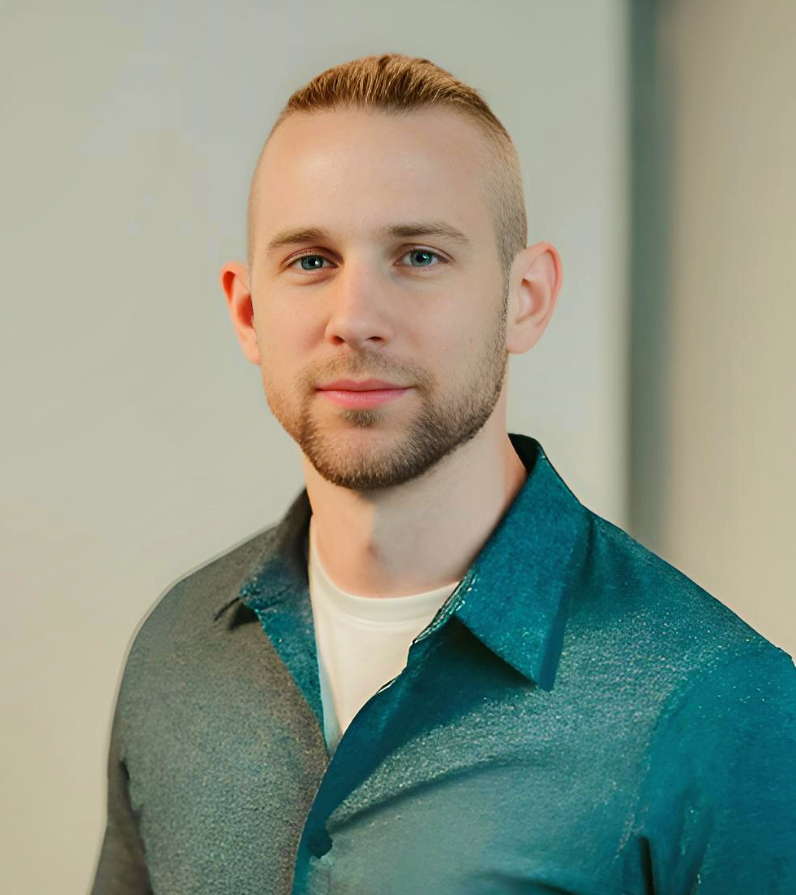
Dr. Brendan Kwiatkowski-Hartman
Dr. Brendan K. Hartman specializes in the social-emotional development and wellbeing of boys and men—and how this connects to the wellbeing of all genders. His interdisciplinary work bridges sociology, psychology, and education to foster healthier relationships, emotional connection, and resilience in individuals, communities, and systems.
Amy Allebest: To kick off today's episode, I'm going to read a section of a poem from Dr. Brendan Kwiatkowski-Hartman, who is a men's educator. He writes, “When I was 16, my best friend and I worked at a summer camp as counselors. One morning, our friend told us she had had a weird dream about us. In her dream, we were a married couple and one of us was pregnant with our child. But me and my best friend were both boys and not gay, and the last thing we wanted, even in a dream, was to be the one with the child, because then that would've meant we were even more girly. And when you're trying to be a man, girly just won't do. So that dream started a real life competition about who was less feminine than the other. For the next eight years, when one of us would do something feminine, the other would say, ‘See, he's more feminine than I am.’ It was an ongoing joke. I viewed the feminine like it was contagious, and the best way to protect against it was to find someone who had it more. People laughed, we laughed, so I guess that meant it was all harmless.”
As you can imagine, this behavior is not harmless. Dr. K-Hartman goes on to write about how this fear of the feminine or of being gay has continued haunting boys and men around him his entire life, in some instances, even claiming their lives. Clearly, there is a need for intervention for a serious conversation about masculinity and how we can protect our sons, our husbands, and our neighbors, from this dangerous loneliness and this performative masculinity, and all other damages of patriarchy. And to help us understand the situation better and, more critically, what we can do about it, I'm excited to welcome to the podcast, researcher and educator, Dr. Brendan K-Hartman. Welcome, Brendan!
Brendan Kwiatkowski-Hartman: Hi, Amy! Thanks so much for having me.
AA: I'm so excited to have you here. I've discovered your work on social media and you bring so much wisdom to this conversation. You're exactly who I've been looking for. I think for years I've been looking for men who are researching men's issues, so I'm super excited to have you here.
BKH: Thank you.
AA: I'm going to read your professional bio first, and then I'll have you introduce yourself more personally afterwards. Brendan Kwiatkowski-Hartman is a researcher, speaker, consultant, and educator specializing in the social-emotional development and wellbeing of boys and men, also focusing on how this intersects with the wellbeing of others. His interdisciplinary research spans psychology, sociology, and education. In 2023, Brendan earned his PhD in education from the University of Edinburgh with a study on the emotions, masculinities, and schooling experiences of Canadian teenage boys. As a mixed methods researcher, Brendan firmly believes in positive, focused, and person-centered research. His approach seeks to humanize and empower participants, giving voice to their lived experiences. He's dedicated to making academic knowledge accessible to all, as well as conducting research that is transformative and practically useful in the real world.
I also have to say, after reading this bio, since I'm a PhD student myself right now in education, this is so refreshing to read. One frustration I have when I study, whatever it is, whether it's gender or race or class, sometimes the research doesn't ever leave academia and it's not able to benefit people in their practical everyday lives. That's a massive frustration for me, and one of the things I feel like I'm called to do is to fling open the doors of the ivory tower and get the information into people's actual homes and relationships so we can benefit from it. So, kudos to you.
BKH: I appreciate that so much. I just had an experience in a New Jersey taxi fairly recently where the taxi driver, he had no clue what I do, he was just blaming academics for the current state of the world, for not translating their knowledge more effectively and communicating it to the public at large. Transferring knowledge from the ivory tower outward is so important.
AA: It's so important! That's amazing that a taxi driver in New Jersey was even thinking about that, right? I know it's a frustration of mine because that's where I live, is kind of like that in-between space between the academy and public education. But that's amazing that everyday people are thinking about it too. That's so fascinating.
BKH: Yeah, absolutely. And then he dropped me off at Princeton and was like, “Wait, who are you?”
AA: Oh, that's so funny. He didn't know the audience. Okay, well, Brendan, if you can start by just telling us a little bit about yourself, where you're from, and some key elements of your childhood and education and what brought you to study the subject that you study now and do the work you do.
BKH: Absolutely. I grew up near Vancouver, British Columbia, Canada, and I am still there today. And at the most core level of like, “How did I get into this?” I think it has to be that I was aware of pain in the world, and it was easier for me to look at other people's pain than my own. I think that actually, for the first while, wanting to reduce pain in the world was probably a childhood thing, but it extended as I became a high school teacher. One of my favorite students in my second year teaching died from suicide, and that was an impactful experience. And then I did my master's in special education, focused on students with– in Canada, they call it “behavioral needs,” in the States maybe “emotional behavioral disorders,” I don't love the terminology, but issues relating to mental health. And then I came across the stat that 81% of students diagnosed with emotional and behavioral disorders were male. And I was a biology teacher and a history teacher prior to that. So I was like, “Okay, how much of this is biology? How much of this is socialization?” And that got me into the study of the pressures around masculinity.
But there are so many different layers and different levels. There's a saying in social sciences that “all research is me-search,” and I've found that to be more and more true. So even though wanting to help teenage boys who were struggling was definitely one of the main reasons why I got into this, as I interview more and more teenage boys, they have given me a mirror to better understand my childhood. I would've looked from the outside as a fairly successful teenage boy from most standpoints. I was the good kid, I grew up evangelical Christian, this sounds cocky, but it's not meant to be cocky at all. I was a people pleaser and I did what everyone wanted me to do. So I think that part of my draw towards some male students who were okay pushing authority, was kind of because they were living a teenage lifestyle that I didn't get to have. But I see all the ways in which we get disconnected from authentic parts of ourselves, and I see that causing so much pain and suffering. And yes, I love to help other people, but I also don't view my own journey as separate from that. The way that I can help other people is also by looking in the mirror. I often say that my mission, or what I want to do, is to create windows so that people can more clearly see and humanize other people's lived experiences, as well as mirrors so that they can understand their lived experiences more and not operate at the painful restrictive narratives.
AA: Beautiful. Interestingly, I mean, we started the episode with an excerpt from a poem that you wrote, I think from when you were a teenager, right? So that leads me to ask, when did you start to analyze gender? Was that already something you were thinking about?
BKH: My first memory of it, when I was around 7 to 12 years old, somewhere in that time period, I remember being in church and looking at the church bulletin. And they would list who the pastors are of a specific church, and I had a regular church but would sometimes go to other ones. And I remember asking my mom one Sunday, “Why is it sometimes ‘children's pastor’ and sometimes ‘children's coordinator’?” And she said, “A children's coordinator is a woman, because women aren't allowed to be pastors.” So that's like my earliest memory of gender as having real world role differences. But I also went on a father-son fishing trip around that time period as well, and that's when me and my cousin, who were like brothers growing up, developed something called “the manly way,” which was a game mainly based on physical strength. We'd do a more dangerous route or jump across a ditch or climb a tree and be like, “This is the manly way,” and encourage each other to do that. There were these scripts that were quite present in a lot of my play from quite a young age.
AA: Mm-hmm. Lots of content to dig into now that you have the lenses you do now to look back on your past. I know that's definitely true for me too. Let's start with a really basic question. It's probably more complicated than people think, though. I'm going to ask you, what is masculinity? How would you define it? And is your definition sort of the agreed upon definition that most people would use, or has your definition evolved as you've studied it?
BKH: I think that my definition is actually quite agreed upon. What is disagreed upon is what is the cause of that definition. Let me explain. I would say that masculinity are beliefs, behaviors, and roles commonly associated with the male sex. But where we have disagreements is, like, are these things calmly associated with the male sex because they're biological in nature, they're spiritual in nature, or socially constructed in nature? Often in academia, they present it as a continuum between biological essentialism, which is more rigid and like it's biologically tied, and then you can have a continuum all the way up to social constructionism, which at its most extreme would say that biology is irrelevant to the conversation around masculinity, and it's all socially constructed. But I prefer a Venn diagram where it's biology, social constructionism, and spiritual reality, because I find that that kind of describes where I interact with people, especially on the ground of, like, there's a biology component to a lot of people's beliefs, but often that's tied into a spiritual belief. But then some spiritual beliefs can be quite flexible and like more Carl Jung-ian would have like an anima and animus, that there's a feminine inside the masculine and a masculine inside the feminine. Those things aren't so necessarily tied to one's biological sex, which is much closer to social constructionism as a flexible framework.
I feel like where we disagree or what everyone kind of disagrees on is, does their own sense of masculine or feminine identity, what is the overlap of those three circles? And then do you think that everyone else in society has to have the same overlap of those circles for what masculinity is or isn't? So that's kind of how I conceptualize it. But generally speaking, people agree that it's beliefs, behaviors, and roles commonly associated with the male sex, but they disagree on why that is.
AA: Yeah, that's a really helpful framework. One thing that I just thought is how difficult it is to have a conversation with someone who does have a different definition or attribution to where those masculine norms come from. I really liked how you phrased the question, like, what's your framing? And does everybody need to agree on it? And maybe that's useful when you are going into a conversation with someone if you know, for example, that they have a firm belief that it's pretty much all biological, but that biological difference comes from God, that we have a spiritual essence that is either masculine or feminine. I come from the Mormon tradition, and that's doctrinal for LDS people that even your soul, not even embodied, is a man or a woman. You're born into a body that matches your spirit. And if somebody has that strong and strict of a definition, it's just good to know that going into a conversation, because you may not be able to agree or find common ground if it’s that rooted in doctrine.
BKH: Absolutely. And I think where we see more polarization – and I very much don't want to belong to any -ism that doesn't have the capacity to self-critique, to critique something that I still agree with – is that I think sometimes people who are far more in the social constructionism camp, they treat the conversation as if it's a decided fact and people are not even close to there. And then it doesn't even bring the conversation to anything meaningful or helpful. It might be helpful to quickly illustrate for the audience that if you do cross-cultural studies asking about the most common gender roles that most societies believe about men, there are two in common: that men are protectors and providers. So from a biological standpoint, they would look at those protectors and providers and see, okay, because biologically men have on average greater height, greater muscle mass, that gives them more connection to the roles of provider and protector. Then from a social construction standpoint, you say it's all about how we construct protection and provision, that we view nowadays protection to be like physical protection. But then if you look at stats of, like, the greatest threat to pregnant women, it's gunshot wounds from men. Well, that's not protecting. So, how we define protecting and provision greatly changes how we view things. Because you could say that a mother breastfeeding is providing tons of nurturing care and sustenance. How we define these terms changes how we understand them.
And then from a spiritual standpoint, they'd look at protecting and providing, and they could have a more rigid idea. The church that I grew up in, actually that church did end up changing some of their theology around women being pastors, so that would be a spiritual belief. But then I know a lot of people who say that in terms of their spirituality, they’re like, “I have both masculine feminine energy, so I'm stepping into my masculine power of leadership,” and then there's feminine leadership. There are infinite ways that people conceptualize masculine and feminine energies. Those are some examples of how people's beliefs would interplay based on where they are on that Venn diagram.
AA: Yeah, I'm loving this. And actually, not to get stuck on this very first question, but this is so useful for listeners. My first assessment was like, “Yeah, if the person is super rigid and firm and it's from religious dogma, there's just not much you can do.” But I think I want to amend what I said based on your response to that. I think it's just good to know where they are and then see if there's something that you can relate to in that and see what might be proximal. What I'm thinking here is when you said people who are purely constructivists, and I find this typically with younger people who don't even want to acknowledge any typical differences between sexes. This is my experience with Gen Z, which is fine, but then you're never going to have a productive conversation if you're both kind of dogmatic in those beliefs. So I love how you're framing this to see, like, “Okay, I see how they're defining what masculinity is. I can see what might be a baby step to get them to consider something different. There's research, there's data that shows that it's actually at least partly socially constructed.” Or from the other side, “There's data that shows–” or “What do you make of typical physical differences?” and be able to acknowledge where they're coming from. I'm just thinking of strategic methods to try to have productive conversations about this, because it's so hard.
“how we define protecting and provision greatly changes how we view things ”
BKH: I'm so glad that this is resonating, because that's my hope in creating frameworks that connect people or make it easier for them to operate on understanding. And this is not just exclusive to teenage boys, but some of my work on the ground with teenage boys has shown me that the worst thing to do to try to change people is to come in with an agenda, trying to change people.
AA: Yep, totally.
BKH: So, just understanding and seeing my agenda in any conversation– and I'm not a pure social constructionist, I'm somewhere along the continuum, personally. But understand that some people's identities would be that way and can hold space for that easily. My agenda from a wellbeing perspective regarding anything is to move away from pure rigidity, so just become a bit more flexible in your beliefs, whatever those are.
AA: That's great. As we're talking around this issue, and this conversation can be so charged, right? I'm curious, in your research and your experience as an educator, why does it tend to bring out so much defensiveness and a lot of big emotions, especially for boys and men when it's discussed?
BKH: Yeah. I'm going to give you another framework. See if you like this one as much. I come to it from an author, Richard Rohr, who has a book called The Wisdom Pattern. And you're nodding, do you know Richard Rohr?
AA: I know Richard Rohr, yeah.
BKH: Okay. Basically, a lot of societies use different language, but the language I really like is that people and societies go through stages of order, disorder, and reorder. And the problem is when any stage gets isolated from the other. And healthy reorder understands that this process is going to continue multiple times. Because as soon as you get to reordered – and some people use learning, unlearning, and relearning – you can become just as tyrannical and fundamentalist as the previous order and then you become the new order. So, why are things so polarized? There are so many different ways to tackle this. Some of my favorite research to describe this comes from a study done in 2023 from the think tank Equimundo, which found that men who are more in a rigid man box, which has more restrictive ideals around masculinity, these things are proven to be worse for boys and men's wellbeing as well as for other people's wellbeing, the more you adhere to them. But they also indicate a higher sense of purpose in life, and having a sense of purpose in life is one of the best benefits of the reorder stage.
Order allows a sense of purpose, a clarity. Growing up in a church with very clear gender roles made it very clear, and I fit into a lot of them, so it made it very seamless and it wasn't much of a challenge for me. It provided that stability. And then disorder comes around, and I would say that sociologically, feminism, especially second- and third-wave feminism, was a huge disorder, disrupting the harmful aspects of tyranny that happen in order. And the benefit of disorder is that it diversifies. But if you stay in a prolonged state of disorder, it can create meaninglessness and purposelessness. I think that we are on the precipice, or we're very much societally stuck in a state of disorder, where we don't have an adequate reorder for men, so men are trying to go back to the order that was there.
One of my favorite things to talk about is our relationship with emotions, and I think there's something very comparable here. They'd be like, “Okay, there were some harmful aspects of masculinity, but we want to skip over the disorder stage.” And one of the disorder stages is just acknowledging the pain that happened in order. So we want to bypass that, like a spiritual bypass or emotional bypass, and just get to the reorder. But we're not necessarily taking full accountability of the harm and understanding the importance of the disorder stage, and we just kind of want to recreate a different order. People get defensive because they have found value in different stages. So, just like people are defensive of disorder because it took away these gender roles that were very clear and straightforward and made sense and provided security and safety, which order definitely does, you also have people that have strong reactions to any stage because each stage requires a huge leap of faith and trust. And people's shame responses are so high, because it means, like, “Wait, you didn't experience benefits from this stage, but you're not acknowledging that I experienced benefits from this. So you're saying that the way that I was was bad.” And I guess this happens anytime that humans make one aspect of their identity tied into who they are. We start losing perspective, and it's like, “Any critique becomes a critique of me,” and then it becomes so much harder to actually have a conversation.
AA: That so resonates with me. And I can see how that kind of longing to go back to where everything felt safe, and a boy grew into a man knowing what he was supposed to do, how to succeed as a human being, how to be a “good man”, that worked for a lot of boys and men. And so it's scary. Change is scary for people. Then it can turn into a zero sum game, where the disorder stage where women are like, “But that didn't work for me, and this other thing works for me,” then men can feel like everything's being taken away from them because they haven't been given a new one. And now I'm just summarizing what you said, but that makes so much sense to me.
BKH: Existentially, to stay in disorder is an existentially difficult position. To be in a state of meaninglessness, it's a hard sell to be like, “You have to let go of your purpose for a bit until you find a new one,” and that is not an easy place for humans to be in.
AA: And sometimes you let go and it can take a generation or two for society to figure out how they're going to reorder. That's an entire person's lifetime, sometimes. If it's the phase of life when they're a preteen going into their adulthood, and that's the stage where society's let go of the old stuff, they don't know what to grab onto. I can totally see how that can describe what a lot of boys and men are experiencing right now, just that terror of, “What do I grab onto then?”
BKH: I think individually there are some great examples that have done it, but collectively, I think we're definitely floundering in that regard. And just to share my own experience, I went into my PhD and masculinity did matter to me, but during my PhD, I kind of had this arrogant notion where I was like– there was a big debate in the field about whether we even encourage positive masculinity or just positive humanists. So I was like, “You know what? Masculine doesn't matter to me. It's just humanness.” And I felt like that was a disorder stage and like there was some beauty in that. But the longer I stayed in that, and I thought I was kind of evolved past caring about this, but especially near the end of my PhD, I was like, “This isn't working.” And I basically had a reclamation process after my PhD of like, “No, masculinity actually still does really matter to me.” So there was that reordering, relearning stage of like, “Oh, I can own that I like having a masculine identity.” Even though the way that I conceptualize that, I don't even love getting into the nitty gritty about what it actually means, I just know that it means something to me, and this would be a part of my spiritual beliefs.
AA: I love that you're sharing this. I actually just posted a video on masculinity on my YouTube channel, and that's what we ended with, those two modalities. And to some people, they do want to hang on. It's really important to my husband, like a healthy masculinity is really important to him. And to some people they're like, masculinity and femininity are completely made up. Just be a good human. To your point. And I think that where I've landed is like, yeah, to some people it matters a lot and to some people it doesn't, so just look at how to be a healthy human and what matters to you. It kind of reminds me of race. We have a lot of friends of, you know, many different races, but specifically Black friends, we know Black families for whom their identity as Black Americans is core. So, so, so important to them. And then we have other Black friends that are like, “It's just melanin. Every human being has a different amount of melanin in their skin.” And that racial identity is not as important to them. And in my opinion, that's great. Either way, just living in the way that feels authentic and healthy to you. There's enough room for that.
BKH: Yeah. Having room for that is so important. It reminds me of my background in special education. Like having a label, is that a freeing thing or is that a cage? And for different people it's a different relationship, and that relationship can actually change over time. They don't have to be locked in all at the same time. Absolutely, I resonate with that.
AA: Okay, next topic. On your website, I noticed the phrase, “The status quo isn't working.” I'd love to know what's wrong with the status quo for boys and men. However we define masculinity, something isn't working. We just talked about boys and men maybe being in a free fall and not feeling a foundation under them. How would you respond to those who might think, and I've heard women say this recently, like, “Sorry, I don't have any pity for boys and men, they have so much privilege and power, stop complaining.” How would you respond to them? Tell us why the status quo isn't working for boys and men.
BKH: Yeah, I'll answer the status quo question first. So, the status quo isn't working, I would argue, for anyone. From a wellbeing perspective, especially in the States, there's a lot more research about that, but things are getting more polarized with Gen Z. It's the most politically divided of any generation in American history. It's the most romantically, relationally divided. Mental health issues are rising, and a lot of it does track with social media, but social media also plays a huge role in messages around gender as well. So from a mental health perspective, things aren't doing great for anyone. I guess it goes back to order, disorder, reorder. The status quo is really fighting for isolated order, disorder, and there's not really much space for what you talked about, like holding the tension that there are different journeys. The main approach that I always use to enter these conversations, which tries to lower the temperature in the room, is from a wellbeing perspective.
If I talk about masculinity, the three most harmful traits of masculinity from a wellbeing perspective are the need to suppress emotions, the need to be hyper-independent, and the need to be dominant over others. But I also believe that all human behavior makes sense in the context in which it arises. And I always, in my workshops, get boys and men to defend these things. What did that provide? What did that protect? What was the advantage of that? But as humans, one of the constant things to reassess is, are we still in survival mode? And you have people like Andrew Tate who say that the real world is a war and it's a fight for the woman that you want, for the money, for the power. The mentality that is probably the hardest message to change is the need to be dominant, because you have a lot of examples of dominance in this world and there's always going to be people fighting for dominance. It takes a huge paradigm shift, and those three rigid and restrictive messages aren't working.
But I also think that the conversation isn't great, because we talk about emotional suppression being one of the most harmful things. And we don't understand that. In my PhD research, the reasons why all teenage boys started to restrict their emotions made so much sense for the context in which they're in. It prevented them from being bullied, it did all these protective things, people in their lives did not have the capacity to handle their emotional vulnerability or they got super burnt by it. So it makes sense in that context. I think that sometimes the status quo around the conversation also isn't working, because we want people to change to heal, but we're getting into a state where it's way more into suffering contests of like, “You think you're in pain over there? No, my pain–” I've seen suicide statistics being weaponized. And I'm wanting to prevent suicides for all genders, but I am specifically focused on preventing suicides for boys and men. But so quickly those stats can be weaponized like, “You think you're in more pain over there? I'm in more pain over here.”
So, to answer the question of how I would respond to the people who say, “I shouldn't care about boys’ and men's loneliness epidemic,” or anything that's going on with boys’ and men's mental health, how I would view that is understanding that I don't think that their lived experience and their pain has been witnessed and held, so it's way harder to have the capacity to hold someone else's. And this goes back to another model that I really love using, which is called the trauma triangle. In Psychology, it was referred to as the drama triangle, but I don't like that name because drama is often associated with how girls and women interact. So I think the trauma triangle is more generous for why people are on the different stages of the triangle, which is an unhelpful cycle of people in the roles of villain, victim, and hero. And when people get stuck in these roles, the problem is rigidity. The problem with almost all of these things is rigidity, when we only view people or certain groups of people as being able to be villains, victims, or heroes. If they are lacking empathy towards boys and men, I feel two things. I feel like non-empathy is not a viable or a helpful approach in my book, but I also hold that I don't think that they've been seen or held or witnessed in their pain. So if I could wave a magic wand in the world, it would be to increase our capacity to handle the emotional distress of ourselves and of others. I would want to handle, and hopefully they can be seen and witnessed as far as I'm able to, and eventually that will also help them be able to see and witness other people's pain, boys’ and men's pain. It's like this dance of people in pain trying to give as much space as possible to other people in pain, and showing up in the greatest capacity we have to hold as many people as possible in pain without denying our own pain. It's just a dance.
AA: I could not agree more. I think that's absolutely true. That's how I feel on both sides. People who just want to go to arguing and outdoing the other person and how much pain they've experienced, somebody has to stop that cycle and just say, “You know what? I'm going to be the first one to listen and to validate.”
BKH: Something that I want to extend and also clarify is, one, I often say that pain isn't fair, but I don't think healing is fair either. It's not fair that sometimes the real life victim heals first and that helps the real life perpetrator. That's not fair, and that sucks. And just acknowledging that. And I also want to clarify that you can take this trauma triangle and use it like a Kumbaya and be like, “Okay, everyone's in pain. Everyone just needs to let each other go.” But that's that spiritual or emotional bypassing as well. That's why I want to live in a world where we are able to handle the emotional dysregulation of other people, that we don't have to tone police everyone, but we can understand that people are angry, people are hurt, people are mad. And rather than dismissing that or being like, “You just need to get along,” I don't want to force anyone along that pattern. I do hope for their own sake and for others’ sake that we can get to a place where we humanize other people. But I guess trying to be in a state of reorder is recognizing that we're all in this process. And as soon as you think that you're superior because you're in reorder, then you've lost it. Then you're back in the order place. This is so much easier theoretically than in person. Like when my wife expresses her anger, because women tend to be socialized out of externalized expressions of anger, on a sociological level, I'm celebrating when women's rage and anger gets externalized. But on a human level, too, it's hard for me sometimes to sit in my wife's anger. That's the tension.
“I don’t think that their lived experience and their pain has been witnessed ”
AA: Mm-hmm. There it is.
I am wondering, as I'm thinking about it, I like that you point out that it's really unfair, and I especially think there's this sense for women of historical injustices. When you look at the harms that patriarchy has done to women since time immemorial, and there's inherited intergenerational trauma that we're just always aware of, from our mothers, our grandmothers, our great-grandmothers, all the way back, there's this sense of the injustice of it. And now I am going to have to sit here and I have to be the first one to listen and I have to be the one to do the work to help the man heal.
I think one thing that's changing the conversation and making women able to care more, at least what I'm seeing, is because this is affecting our sons. It's affecting young boys, and this mental health crisis is affecting children, and I think that can be a safer place to start to have empathy, to have empathy for children and recognizing, “Oh, I can tend to children.” And that sometimes can open up a door in women who I think, understandably, do have so much rage, like you said. And thank you for honoring that. And they might not be able to go to their dad and be a good listener to their dad about how their dad is struggling, but they'll be able to with their son. And that can open a door to be able to say, “Yeah, actually, I can sit with your pain too.” But yeah, it's not fair. It's not fair for women to be asked to do that, necessarily, when you look at it from a structural, systemic, historical point of view.
BKH: Yeah, exactly, because that actually just replicates the trauma triangle of the hero. The hero steps into a role of helping the person, so if they think that men aren't capable of their emotions, that's very patronizing, actually, of men. But also for the hero role, if women are forced to do this emotional labor, more emotional work, that builds up resentment. The whole goal is to be aware of where you are and to get off the triangle. And there are different things that each role, if you're stuck in one role, would need to be aware of, and I could go into all of them, but essentially it's a world of difference between a woman who feels like they should or that they need to be the emotional safe haven for a boy or man in their life. There's a world of difference between that and between women who are choosing, like, “This is how I want to show up.” And a theme in my research was women as emotional safe havens, which is the majority, not all, but the majority of the teenage boys felt like they could be most emotionally vulnerable with a woman in their lives, a girlfriend or a mother. And I did a TikTok that went fairly viral about this, asking women what they felt about their experiences of being an emotional safe haven. And by far the most comments were like, “I'm totally down for being it, I just hope that it becomes reciprocal at some point.”
AA: Yes, exactly. That's very, very interesting. One other phrase, like a soundbite that I'd love to have you talk about, is toxic masculinity. That has come up between me and my husband, too. He now understands that it doesn't mean that all masculinity is toxic, but that is definitely how it hit him for years, and I didn't realize that that's how he was hearing that phrase. But my understanding is that you just don't like using that and you'd prefer something else instead. What are your thoughts on the word “toxic”?
BKH: I'm going to answer this from a place I've never answered it before, and let's see how it works. Growing up as a Christian, the most harmful theological belief that I internalized was the belief that I was inherently bad, evil, sinful at my core. And unlearning that message– and there are totally different doctrines, the doctrine of total depravity was definitely the one that I grew up in. I talked to my dad about this a couple years ago, and he was so confused. He was like, “Yeah, sure we taught you that, but we also taught you that you were beautifully and wonderfully made as well.” And it's like, “Okay, well that's not what I took in.” So I think that sometimes we think that people can take in different things, but the messaging around toxic masculinity… I have two very different opinions. The reason why I don't use it is because I don't think it's effective for strategic reasons. I also don't think it's the most accurate way of describing what's going on. I have no problem saying that certain specific actions are toxic, like believing in rape myths. Yeah, if you think someone wanted it or all these other things like how they were dressing, that's a toxic belief for sure.
But I think that there's a difference between boys hearing a lot of negative messages around masculinity. A psychologist I work with told me one time that sometimes “toxic” is just implied, it's like an invisible word. Masculinity becomes that way. And I know that terminology around toxic masculinity was never meant that all masculinity is toxic, but that is still how a lot of people can interpret that. But I also think that the men who are telling young boys this are not being accountable to the nuance of that conversation. I think that some of them are willfully misrepresenting the narrative around toxic masculinity. So I have a different standard or accountability for those men as I would for the men who were just hearing a lot of negative messages or the boys internalizing these messages in a different way.
So, I think that for better or for worse, that term is not helpful to be used. And going back to what I said, the three most harmful aspects associated with masculinity, the upstream things are emotional suppression, hyper-independence, can't ask for anyone's help, and dominance. Those three things, I say, can lead to toxic behaviors. But if you take apart one of them, like emotional suppression, the three main reasons why teenage boys suppress their emotions is fear of being judged, being seen as weak, fear of being a burden. They care for people in their lives and they don't want to add to their stress. They're going through enough stuff as it is. Boys, in my research, both felt like those two reasons were connected to masculinity specifically. They didn't think the third reason was. The third reason was just that they had been emotionally close with someone in the past and that had ended, whether through death or just a best friend moving away suddenly. And they're like, “I don't want to get emotionally close to someone again, because that was painful enough the first time.” So if we can be very clear about the terminology, that if they just hear “toxic masculinity” and it's kind of a broad sweep that doesn't match their lived experiences of that being actually very beneficial for their survival, or, like, “That's what people in my life wanted,” it doesn't resonate. It's too broad of a brush. I would just want people to be more specific about it. I'm not offended by the term, I just don't think it's effective.
AA: Yeah. That's great. I think it's misunderstood often enough, or like you said, misrepresented as like a lightning rod, maybe it's just not useful as a term.
BKH: Yeah. And I do think that positive identity formation is really important, especially developmentally for anyone. And there are so many messages of ways not to be, which is like that unlearning stage. You need the unlearning stage. But I think boys are being raised without the order that's kind of developmentally more appropriate. They're growing up in the disorder phase, sociologically, and that creates more room for people to reach them with messages like, “This is a clear order.” A study in Australia showed that 36% of teenage boys view Andrew Tate as a role model. But then if you look at why they view him as a role model, some of the top reasons are that he's not afraid to say what he wants and that he provides a clear outline of like, “I want to be strong, so this is how I'd be strong. I want to make money, this is how I make money.” He's giving that clear, rigid order, and that makes sense in a world where messages around masculinity are in more of an unlearning stage.
AA: Yeah, yeah. Very interesting. That just leads me to wonder what you would propose to build. If we are trying to give boys and men positive messaging, what do we want instead? We don't want this old way of dominant and restrictive masculinity, but it's disorienting to keep living in the disorder. What would you propose for the next phase, societally, and what would that look like on an individual level, too, for boys and men?
BKH: That's such a great question. And I might have to, or maybe I'm writing a book about it.
AA: Awesome!
BKH: I need to have much more ample time to unpack that, but what you can't do is have one unilateral, monolithic approach to the reorder stage. I'd love to live in a world where adult men have gone through order, disorder, and reorder so that boys can be raised in an order stage informed from that reorder. I guess the movement is from rigidity to holding a bit more space, so a bit more space for discomfort. You know what, before I give you my answer, I just want to model what's coming up for me. Whenever I hear these questions, and these types of questions are the most prominent because I do talks for parents and teachers, like, “What do we do? How do we actually do things?” And yes, I have specific strategies, but there's also a desire to give people such tangible things because there's so much pain and there's so much need for it and also because the more tangible it becomes, it also becomes a bit more rigid. And that is kind of counterintuitive to what we're trying to go for here. So I do think that some people's journeys to reorder will be positive humanness, and I think that for the majority of boys and men in the world, it will be a positive masculinity, which is more expansive. It is recognizing that my personal masculinity can be different from someone else's masculinity. In the research, academically, this would be called multiple masculinities, recognizing that there are multiple ways to be a man and that there is encouragement along those ways.
I would like there to be more openness so that boys don't feel ashamed of a masculine identity. And I do talk to boys who are ashamed, like, “I don't know what I could be.” So there's room for humanness and for a masculine identity. And what I would want the most reorder from a masculine identity perspective to be, would be something that moves from performance to presence. Anything that connects us to the here and now, to our bodies. So if emotional suppression, let's say, started for a really good reason, for survival, that was protective right in that moment. But then if you continue suppressing, that's disconnecting you from yourself and from others. So it's always looking for ways in which your identity can bring you more into presence. I would say this about religious and spiritual beliefs as well, is that when things become most helpful is when they actually increase your presentness in living in the world.
Like embodiment, you might have heard this expression before, that almost anything can be a medicine or a drug depending on your intention. Working out, being physically fit, absolutely can be a great medicine to embody people. But at the same time, it can be a drug, like increasing bigorexia, muscle dysmorphia, rising rates of disordered eating amongst men and boys and men and steroid use, gear use, all those things. It's the tension of both. And again, using a personal example, I like being athletic, but I took like a year off of working out because I didn't know if I was working out because I hate myself or love myself. And then where I've come to is that I don't think I need to be so black and white. Some days I'm working out because I'm not satisfied with my body, and some days I'm working out because I love my body and I'm hoping to get to more days of loving my body. So, reorder, I think, is a lot more gray and holding nuance. Reorder would look a lot more gray and gracious.
AA: I love that. That's so interesting. Would it be fair to say, and you identified those really harmful aspects of what masculinity has been thought of traditionally – dominating over others, restricting emotions – maybe after subtracting those you're still left with so many positive manifestations or choices or ways to be masculine, but just taking the bad out. Is that a valid way to look at it?
BKH: Yeah, absolutely. I should have mentioned that. And actually, my supervisor got mad at me for using the word “emotional stoicism”. She's like, “Why do you keep using ‘stoicism’?” I was like, “Well, it's always in the research.” She's like, “Go research the history of stoicism, the philosophy behind it.” And don't get me wrong, Marcus Aurelius at the time was still also getting critiqued about, like, there was confusion about whether it's emotional suppression or whether it's not. And I would say that stoicism is largely misapplied by a lot of men who actually are just referring to emotional suppression. But I think that stoicism is actually a lot of traits of emotional intelligence, of being able to feel and recognize the feelings and not be controlled by them. I think those are really good skills. So you can have positive messages from the emotional suppression. I don't know, this could get into a debate about whether it's helpful to reframe emotional stoicism, but definitely reframing emotional intelligence and building emotional intelligence skills would be like being strong and sensitive, or seeing vulnerability as a strength, as a positive reframe. And then for hyper-independence, self-reliance is a really great thing, but we know that the need for community, the need for support from each other is one of the best predictors of life satisfaction in a long life. And the reframe for dominance is that I would describe dominance as power over, whereas power with or power for would be the reframes there.
AA: Yeah, yeah, yeah. Fantastic. Well we only have time for a couple more questions. I wanted to make sure to ask you about the show Adolescence. I just barely watched it. It took me a while to get to it because I was not up for it for a few months because I knew what it was about. And I'm so glad I watched it. I thought it was really important, incredible filming, well written, well acted. But it's the really harrowing story of a 13-year-old boy who's found guilty of stabbing a female classmate to death when it comes out that he's been influenced by the manosphere and a lot of really dangerous online rhetoric. I wanted to ask you specifically about what you thought of the show Adolescence, and also because we haven't really talked about this strain in, especially current, masculinist spaces, that really is misogynistic and really denigrates, fears, and demeans women. I wanted to hear about that in general and then what you thought of the show specifically.
BKH: I ended up writing a blog post about my reaction to the reactions to the show Adolescence, so I'll start there. I think there's a lot of fear that has increased. I got a lot of DMs like, “This is my first introduction to the manosphere. Is this something I need to be aware of for my son?” Things like that. And what I like most about that aspect is that absolutely the manosphere, but I would say more specifically than the manosphere, I think the red-pilled aspect of the manosphere, the toxic masculinity– I think “manosphere” is a bit too broad and not exact. The red-pilled manosphere is very anti-feminist, very misogynistic, and very much back on the trauma triangle where men are the main victims and women are the perpetrators. But also with incel communities, they have women as the heroes as well. They hate women and feminism, particularly for the state of masculinity or men in the world today, but they also view women as the heroes that can save them from their loneliness and from their needs, and can meet all their needs. It's a totally perfect example of the trauma triangle in action.
The show, I think, is really important for highlighting that teenagers are exposed to these red-pill messages. Absolutely. I work in schools across North America, and that is something that many schools approach me about, because they're noticing an increase in sexist talking points because of those communities. So, absolutely that's a thing. On the other side, like in the UK they’re saying that we need to show this to all students in schools. I do not think that's a good approach. I think that will actually backfire. I think that there are some people that can be so reactive from a fear-based lens. There are people who are like, “This show just hates men” or is like the war against boys and men even more. You should be having empathy for primarily women who are the sexist targets of a lot of red-pilled content. And at the same time, I don't want to dehumanize boys and men. So if that show makes you dehumanize and be like, “They're all disgusting, they're all into this.” It's more complicated. Yeah, 36% of teenage boys in that one study in Australia do see Andrew Tate as a role model. But how many of those see all the sexist talking points? That, I would say, is a smaller number. I talk to teenage boys all the time, ones that hate Andrew Tate, and the majority of them do not like Andrew Tate, but they also can't escape his type of content online. There's a recent study just done that if you're a teenage boy on social media, on Snapchat, it's like 30 seconds before you start seeing anti-woman content. So they're being exposed to all of these things, but it doesn't mean that they are liking all these things.
“if you’re a teenage boy on social media, on Snapchat, it’s like 30 seconds before you start seeing anti-woman content”
I think probably one of the things that is most important to address is that men tend to assume other men are more sexist than they are. So if the silence around these things, if boys, men are silent and they hear a sexist joke and then no one steps up, then they're going to think that everyone else is okay with that. And then the bar for what is sexist or not keeps on going higher and higher and higher. So that absolutely needs to be addressed. But I think that there's so much nuance in the show. For instance, the incel community, which means involuntary celibate, they're not red-pilled, they're generally black-pilled, which is a more nihilistic state. Their suicide rates are extremely high. They're way more likely to harm themselves than others, from a statistical standpoint. But saying all these things, I always imagine audience members listening to this and being like, “But they're the villains,” or “They're the perpetrators.” I would say that the show is great for highlighting really important issues that need to be addressed, but I don't want it to just perpetuate trauma triangle dynamics.
AA: Yeah. Interesting. I did think that the show did a great job with nuance and presenting a wide range of behaviors, emotions, and internal experiences. I felt a lot of, I mean, I hesitate even to say it, but this 13-year-old kid. You care about him, he's a child, and he did this horrific thing, but he's also a child. The most striking character of all for me was Jamie's dad, just the complexity that that man had experienced in his life and the way the actor portrayed it. I do recommend that listeners watch it if you haven't yet.
BKH: Yeah. My favorite episodes were three and four. And I just realized that I answered that whole thing based on other people's perspectives, and that is such a people-pleasing thing of me to do. I should just answer it for myself. Episodes three and four, particularly, I think there's so much important nuance and context. And absolutely, what you mentioned is that audience members should pay attention to where they feel like their empathy or compassion is drawn to in any given moment, and sit in that tension. That is the messiness of these issues. I was in tears in that fourth episode so much.
AA: Oh, me too. My whole family was. And the show does a pretty good job of not being didactic either. It just shows you all the complexity and you have to sit with this and then it's over. It doesn't really try to make sense of it, which is something that I actually appreciated, but it leaves a lot of work up to the viewer to do that work.
BKH: Yeah, absolutely. And that's where I went in my people pleasing mode, because I know all of the various reactions, like, “It was too empathetic. Why didn't we talk to the victim and see the victim's impact on the family?” I think the show is very self-aware and made mention of that issue. It's complex stuff. And I just realized that I fell into the same trap. One of my personal growth goals is wanting to not diminish anyone's lived experience, and yet there's a tension there of humanizing and seeing healing, but the internet is so diverse and you can't control how it's going to be interpreted.
AA: Mm-hmm. I feel you, man. I'm an oldest child, a recovering people-pleaser myself.
BKH: I fully feel that.
AA: It can be tricky, it can be tricky. Okay, we'll get to our last question. As we wrap up this episode, this has been so fascinating, Brendan, I want to ask if there are any action items that you could leave listeners with. I've been ending all of our episodes in season five with actions that we can take to make the world a better place. From your point of view, and given all the research that you've done, what would you recommend that we actually do in our daily lives to try to improve this situation?
BKH: I would have different answers for different demographics. I guess the most broad is that I think that we need to reevaluate our own relationships and the stories we've come to believe around emotions, masculinity, and change or healing in general around these topics. Our own relationship with emotions is like, if we want sons to be emotionally flourishing and we know that teenage boys, one of their main reasons for suppressing their emotions is that they don't want to burden other people, maybe they don't want to tell people they're getting bullied at school because then their parent freaks out and then they're caring more about the parent, we have to increase our own emotional intelligence as parents. Dr. Marc Brackett has a really helpful list of skills to build with the acronym R.U.L.E.R.
Recognizing and understanding your emotions, what's going on, understanding the cause and consequence of emotions, I'd say this is probably one of my biggest ones for men especially, but anyone, is that causes and consequences of emotions doesn't mean, like, “I'm angry, so then I punch something.” It means, do you understand why the anger came out? Is that a primary emotion or often it can be rooted in shame. For instance, shame is the feeling that I am bad or something's wrong with me. Anger is more outward focused, and so if you don't want to feel negative about yourself, then outward expressions of anger can be really quick to protect you from feelings of shame. So you might not even be recognizing that shame came up for you in a moment, and it's just immediately anger. If your masculinity is threatened by what someone else says, or someone is actively trying to threaten your masculinity, calling you weak, can you recognize that there's this level of shame that comes up first, and then you can increase your capacity to recognize and sit with that shame so it doesn't result in something more harmful?
They've done a ton of research studies where they do threaten artificially, they threaten a man's masculinity by saying, “Your answers were far more feminine,” or “Your testosterone results came back and they're much more feminine.” And then men are more likely in those types of studies to report higher levels of sexual partners in the past, they're more likely to lie about their height, they're more likely to demonstrate aggression as well. And one unique study prized apart the mechanism for that, which is that they said, “You got outperformed by a woman.” And for almost all of the men, their experiences of shame went up. But if the experiences of shame led to anger, then they were more likely to sexualize that fictitious woman that had outperformed them. But if they just sat in their shame, I don't know enough about the debrief of that study of what came after, but they weren't more likely to sexualize that woman.
So, increasing our capacity to sit with distress, and I would say shame is one of the main emotions to target. In an ideal world, I would want almost every adult to take one emotion per week in your journal and reflect on your relationship with this emotion. It might cause you to do a quick Google search or ChatGPT of “What is this emotion?” Because if you don't know anything about the emotion, that might be hard. But like, okay, there's inward anger and there's outward anger. What's the relationship like with that? Just assessing all those things for ourselves would be a great place to start for building emotional intelligence. And then I have so many other things. I guess on this emotional side I would encourage people to become emotional safe havens for themselves. You might not have other people in your life to be emotionally expressive with, which sucks, but can you start being curious about wanting to get to know yourself. That's probably been one of the most helpful reframes in my own counseling and healing journey is realizing that I'm actually scared most days to meet myself, and I don't want my children to grow up afraid to meet themselves. I have this underpinning that getting to meet myself is something that I want to do, and I'm curious by the fact that I'm so resistant to getting to know parts of myself that I would rather not look at for various reasons.
AA: Wow. That's powerful. I think a byproduct of that, of doing that emotional work and knowing ourselves, is that we will be able to be better emotional safe havens for our children, and more emotionally intelligent to help them process their emotions.
BKH: So much is modeling.
AA: Yes, yes, yes.
BKH: So much is modeling. And of course there are other strategies that are more targeted, but we can't get into all of this.
AA: Yeah. Oh, that was awesome. That's a fantastic takeaway, Brendan, thank you so much. My last question is, can you tell us where listeners can find your work? Tell us any social media handles, tell us where people can find you.
BKH: Everything's from my website, www.remasculine.com, and my social media I'm most active on is TikTok and Instagram with a similar username, @remasculine or @re.masculine. And if you sign up for my newsletter, you get some free resources for parents and teachers and I do monthly emails. I'm supposed to do more, because apparently book publishers want you to increase your newsletter subscribers, so I need to work on that.
AA: Haha, awesome. Well, highly recommended. Dr. Brendan Kwiatkowski-Hartman, thank you so much for being here today.
BKH: Thank you. It was great talking with you, Amy.
