
Evidence of patriarchy is visible in humans’ earliest written records. But what does the patriarchy in ancient texts have to do with our lives today? How might our world be different if foundational laws had been more inclusive of women? Watch the video above for surprising connections between our ancient past and our current lives.

Patriarchy means the rule of men, and it is one of humanity’s oldest social structures. It has affected the majority of the world’s societies and cultures throughout time. But despite its prevalence, both patriarchy and its critiques are often misunderstood. Watch the video above to understand why and learn more about the characteristics of patriarchy.

As we all know, for many thousands of years, people all over the world believed in religions that included gods and goddesses. But think about the world today. We’re still very much into gods... what happened to the goddesses?

In this episode, we introduce three groundbreaking women whose work changed the world… though I'd never even heard about them until recently!

Would you call yourself a feminist? Why or why not? And does it matter? Today let’s unpack the word “feminism” — whatever you think right now, you may find yourself thinking differently by the end of this video.

What do the gendered messages that girls and boys receive from society today have to do with the disturbing history of medical treatments like “the rest cute” and “the west cure”? Watch this video to learn about these fascinating gendered treatments for depression.

I’m sure you’ve heard about trad wives - short for “traditional” wives - who embrace traditional gender roles like cooking all their food from scratch, homemaking, and supporting their husbands as the head of the household.

Have you ever thought about how western naming traditions seem to erase women? Why are the ways that women are named and addressed seemingly dependent on their relationship to men? And where did this naming tradition come from? Here's a little thought experiment that may help answer some of these questions.

Feminists are often associated with two things: bra burning and man-hating. But did feminists in the 1960s ever actually burn their bras in protests? And what exactly led people to think they hated men? Watch this video to learn how the 1968 Miss America pageant helped initiate the second wave of feminism and ignite the myth of bra burning.

Have you ever noticed the patriarchy in our naming systems? What would an egalitarian naming system look like?

In the 1950s, the nuclear family model had men earning money while women managed the home. With second-wave feminism in the '60s and '70s, more women joined the workforce—but was there a push for men to take on housework?

Why do we as women feel so much pressure to be beautiful, and why is the standard of what is considered “beautiful” so incredibly specific and narrow? Here’s a look at the history of the beauty myth.

Why is it so hard to center women in heterosexual sex? So. Many. Reasons. We unpack them in this video.

Have you noticed that sometimes being a man is talked about like it’s a bad thing? Does it ever feel like masculinity is something to be ashamed of? Well, you’re not making that up. We hear it too. We want you to know that you should not feel one ounce of shame that you are a boy. But you do need to know that you were born into a patriarchal world. In this video, we talk about what that means and how that affects you in ways you may not even realize.

What do women in their 80s regret most? And what does that have to do with you, right now? This is a cheat sheet for teenage girls navigating a world still shaped by patriarchy. Watch before you make the mistakes so many women wish they could undo.

Have you seen Sabrina Carpenter’s new album cover for "Man's Best Friend"? Some people are calling it brave. Others are calling it dangerous. But everyone has an opinion. Is this feminism? Is it satire? Or is it just patriarchy in designer heels? Let's dig into patriarchy in the music industry and the sexist ideas that have been shaping our music for decades.

Who are you, really... and where does your sense of self come from? In a patriarchal world, the voices of men in power shape how women see themselves. But what does that do to a woman’s identity? And can it ever be undone? Let's dive in.

Do you ever find yourself longing for “the good old days"? A simpler time when everything felt easier and no one was doomscrolling? But what exactly are we remembering, and what are we leaving out? Let's dig into how nostalgia and hidden patriarchal frameworks shape our view of the past.

Have you ever noticed that the "Hero's Journey," the default narrative that seems to shape most of the world's famous stories, doesn't really fit for women and their lived experiences? In this video, we tackle how Maureen Murdock rewrote the myth of the hero for women, and what the "Heroine's Journey" reveals about our culture.
So, buckle up. We're going off the map!
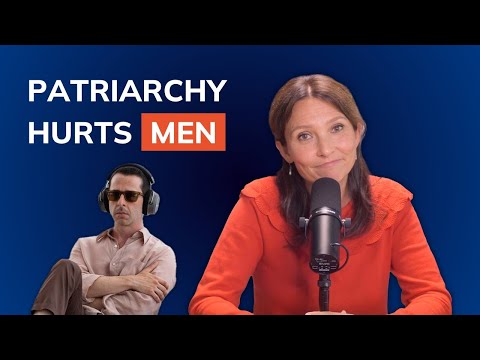
Could patriarchy be crippling men’s ability to grow up — particularly how they process and express emotions? Let's dig into five of the main ways can patriarchy can stunt emotional development.

Join us behind the scenes for an exclusive look at the making of "Dear Mormon Man, Tell Me What You Would Do," with author Amy McPhie Allebest, artist Becca Lee, and narrator Stacey Harkey, as they share their thoughts on the process and experience of bringing this unique story to life.
What if, after 40 years of dedicating your life to a belief system that wasn't inclusive of your gender, you felt you had reached a breaking point? What would you do?

Is any choice made by women inherently a feminist choice? And if it is, then why do women sometimes vote against their own rights or interests and against the rights and interests of other women? Let's dive in and talk about "Choice Feminism."

Where did drag come from? Why do people have such strong feelings about it? And what does it have to do with patriarchy? If you’re unsure how to feel about drag — if it makes you a little uncomfortable — then this video’s for you.

Let's talk about weddings. What stories do wedding rituals tell about women and men? What stories do they tell about power? And if some of our beloved wedding traditions turn out to be patriarchal… do we need to let them go?

Chivalry is often framed as kindness, romance, even moral virtue. But its history tells a more complicated story: one rooted not in love, but in violence, hierarchy, and power. In this video, we trace chivalry from medieval war culture to modern dating norms, and explore how something that feels “good” on the surface can carry hidden expectations underneath.
